Hoarding Doesn’t Just Create Clutter — It Creates Fuel
To a trained eye, a hoarded property doesn’t look like a storage issue.
It looks like a fire load problem waiting for ignition.
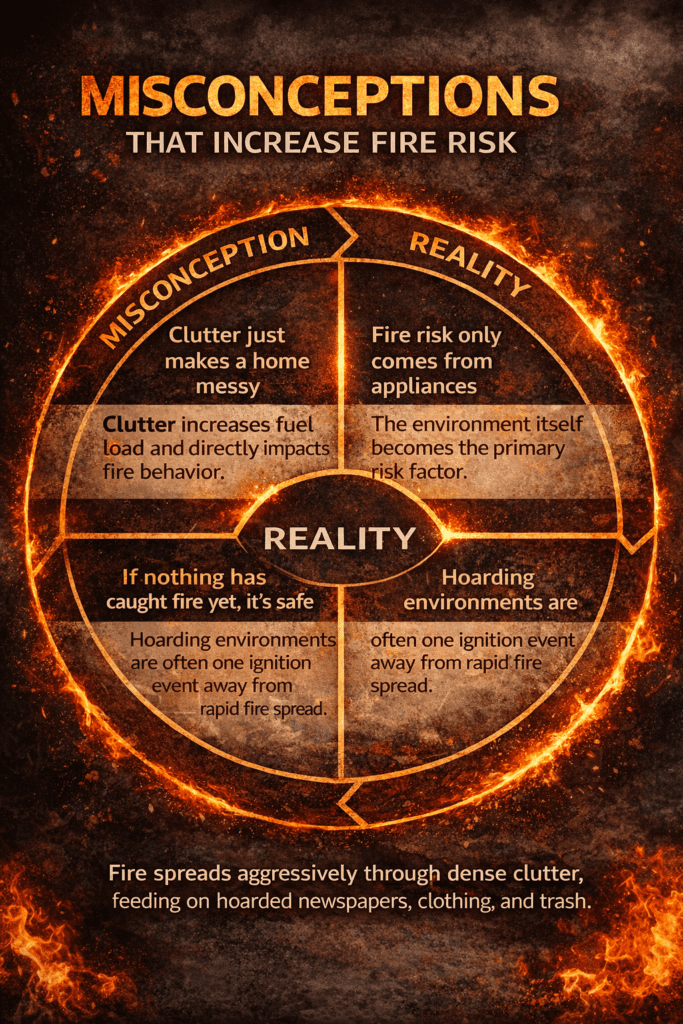
Every stack of paper, every pile of clothing, every compressed layer of debris represents stored combustible energy. When that material accumulates beyond normal living conditions, the environment changes from livable space to high-risk fire environment.
Fire departments across the country recognize this reality. Hoarding conditions are routinely flagged as elevated-risk structures due to how quickly fires can ignite, spread, and trap occupants.
Why This Matters Now
Hoarding cases are increasing, and with them comes a growing intersection between:
- public health
- structural safety
- fire risk
- liability
For landlords, municipalities, property managers, and families, the concern is no longer just sanitation — it’s life safety.
A hoarded property:
- burns faster
- spreads fire more aggressively
- restricts escape routes
- complicates rescue operations
And when a fire does occur, the consequences are often significantly more severe than in a standard residential environment.
Also Read ☣️When One Apartment Puts the Whole Building at Risk
The Fire Science Behind Hoarding Conditions

Fire behavior is driven by three core elements:
- fuel
- oxygen
- ignition source
Hoarding environments fundamentally alter all three.
Hoarding Clean-up Services
1. Fuel Load: The Hidden Multiplier
Fuel load refers to the total amount of combustible material within a space.
In a typical home, fuel load is predictable and limited. In a hoarded environment, it becomes extreme and uncontrolled.
Common high-risk materials:
- paper and cardboard
- clothing and textiles
- plastics and packaging
- furniture and foam materials
- accumulated waste
As these materials stack and compress, they create:
- dense fuel concentrations
- layered burn patterns
- extended burn duration
- higher heat output
Why this matters:
Higher fuel load means:
- faster fire growth
- more intense heat
- quicker flashover conditions
- greater structural damage
This is one of the primary reasons fire departments treat hoarded homes as high-risk fire environments.
Also Read ☣️Can Hoarding Cause Structural Damage and Fire-Code Violations in NYC?
2. Ignition Pathways: More Ways for Fire to Start
Hoarding environments increase the number of potential ignition sources due to:
- overloaded electrical systems
- blocked or buried outlets
- damaged wiring
- improper use of extension cords
- heat-producing devices surrounded by debris
Additional risks include:
- cooking areas obstructed by clutter
- smoking materials near flammable contents
- appliances unable to dissipate heat properly
When ignition occurs, it is rarely contained. The surrounding fuel load allows fire to spread immediately and aggressively.
3. Blocked Egress: The Most Dangerous Factor
Fire risk is not just about ignition — it is about escape.
In hoarded environments:
- hallways are obstructed
- doorways are narrowed or blocked
- windows may be inaccessible
- pathways are unstable or hazardous
The consequence:
Occupants may not be able to exit quickly or safely during a fire.
For emergency responders, blocked egress also:
- delays rescue operations
- increases firefighter risk
- limits access to interior spaces
This is one of the most critical life-safety concerns associated with hoarding.
4. Structural Fire Behavior: How Hoarding Changes Fire Spread
Hoarding alters how fire moves through a structure.
Instead of predictable spread:
- fire travels through layered debris
- heat becomes trapped within materials
- smoldering fires can develop unnoticed
- sudden flare-ups occur when oxygen is introduced
These conditions create:
- unpredictable fire behavior
- hidden burn zones
- extended fire duration
- increased collapse risk
🚚Service Area
When Fire Risk Becomes Reality
A hoarded property experiences a small electrical issue behind a wall outlet.
In a standard home, this might result in minor damage.
In a hoarded environment:
- fire spreads into nearby paper and textiles
- dense debris accelerates burn intensity
- blocked pathways prevent quick exit
- responders struggle to access interior areas
What could have been a contained incident becomes a major structural fire event.
Also Read ☣️The Economics of Hoarding Cleanup: Understanding Cost, Risk & Property Protection in New York
Why This Changes Cleanup Urgency
When hoarding is viewed through a fire-risk lens, the urgency shifts.
Cleanup is no longer about:
- organization
- sanitation
- visual improvement
It becomes about:
- reducing fuel load
- restoring safe pathways
- eliminating ignition risks
- improving emergency access
Delaying cleanup means maintaining a structure that is:
- more dangerous to occupy
- more dangerous to respond to
- more likely to sustain severe fire damage
Also Read ☣️How Hoarding Impacts Insurance Claims, Liability & Property Coverage in New York
Why Professional Hoarding Remediation Matters
Professional remediation addresses fire risk in ways general cleanout services do not.
This includes:
- controlled removal of combustible materials
- safe handling of hazardous debris
- restoration of egress pathways
- identification of hidden risk zones
- reduction of environmental hazards
This aligns not only with public health standards but also with life safety principles recognized by fire departments and emergency responders.
Also Read ☣️Hoarding Cleanup FAQs | Expert Answers from New York’s Leading Biohazard Remediation Specialists
Increased Scrutiny on Hoarding as a Fire Risk
Fire departments and municipalities are becoming more proactive in addressing hoarding conditions due to:
- increased fire severity
- responder safety concerns
- property risk escalation
- community safety impact
Expect:
- stricter enforcement
- more inspections
- greater emphasis on remediation
- increased liability for property owners
Hoarding is no longer viewed as a private issue. It is increasingly recognized as a community safety concern.
Hoarding Turns Homes Into Fire Hazards

Hoarding doesn’t just increase risk — it changes the entire fire profile of a property.
Higher fuel load, increased ignition pathways, blocked egress, and altered fire behavior combine to create an environment where:
- fires start easier
- spread faster
- burn hotter
- and become more dangerous for everyone involved
CTA
If a hoarding situation is present, the risk goes beyond cleanliness — it becomes a life safety issue.
Absolute BioRemediation provides professional hoarding cleanup and biohazard remediation across New York, helping reduce fire risk, restore safe access, and return properties to a safer condition.
☎️About Us

10 FAQs
1. Why is hoarding considered a fire hazard?
Because it significantly increases fuel load and blocks safe escape routes.
2. What is fuel load in a home?
It refers to the total amount of combustible material present.
3. Does clutter really affect how fire spreads?
Yes. It can accelerate fire growth and intensity.
4. Why are blocked exits dangerous in a fire?
They prevent occupants from escaping quickly.
5. Can hoarding affect firefighters?
Yes. It increases risk and limits access during emergencies.
6. Are hoarded homes more likely to have severe fires?
Yes. Due to increased fuel and restricted conditions.
7. What are common ignition risks in hoarded homes?
Electrical issues, appliances, and heat sources surrounded by debris.
8. Does hoarding change fire behavior?
Yes. It creates unpredictable and more intense fire patterns.
9. Can cleanup reduce fire risk?
Yes. Removing excess materials lowers fuel load and improves safety.
10. When should remediation be done?
As soon as hoarding creates blocked pathways or excessive accumulation.