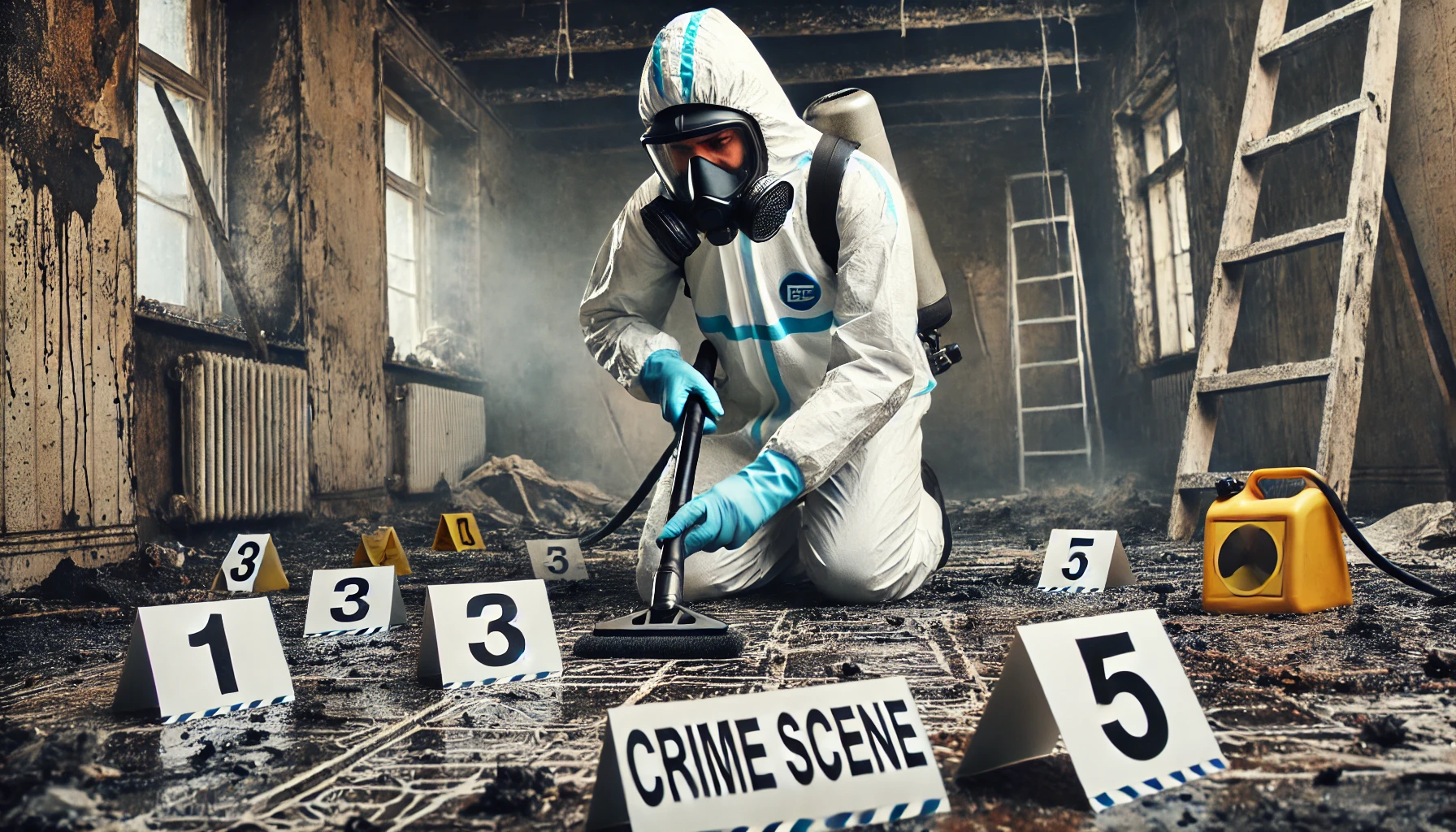
Category: Unattended Death & Crime Scene Cleaning

  • Why DIY Odor Removal Fails After Trauma or Death

    Why DIY Odor Removal Fails After Trauma or Death

    Why DIY Odor Removal Fails After Trauma or Death—and What 2026 Professionals Do Differently

    DIY odor removal fails after trauma or death because decomposition odors are caused by complex VOCs that embed into porous materials, structural cavities, and HVAC systems. Professional 2026 remediation succeeds by combining source removal, material evaluation, controlled air chemistry, airflow management, and post-remediation verification rather than masking smells with consumer products.


    Introduction: “We Tried Everything… Why Is It Still There?”

    Homeowners dealing with lingering odors after a traumatic event often do exactly what seems logical:

    • Deep cleaning
    • Replacing furniture
    • Running air purifiers
    • Using sprays, foggers, or ozone devices

    And yet—the odor returns.

    This isn’t because the effort was lazy or misguided. It’s because decomposition odor is not a household cleaning problem. It’s a chemical, structural, and airflow problem.

    Also Read ☣️The Science of Odor Neutralization After Trauma or Death


    The Core Misunderstanding: Odor Is Not Dirt

    Dirt Sits on Surfaces. Odor Lives in Systems.

    DIY methods are designed for:

    • Cooking smells
    • Pet odors
    • Everyday indoor air issues

    Trauma and death odors are fundamentally different because they involve:

    • Volatile organic compounds (VOCs)
    • Deep absorption into materials
    • Ongoing off-gassing
    • Redistribution via airflow

    You can clean every visible surface and still leave the odor source intact.


    The Most Common DIY Odor Removal Methods—and Why They Fail


    1. Air Fresheners and Scented Sprays

    What they do:
    Temporarily overwhelm your sense of smell.

    Why they fail:
    They do not neutralize VOCs. Once the fragrance fades, the odor returns—sometimes stronger due to sensory contrast.


    2. Consumer Air Purifiers

    What they do:
    Filter particulates and some general odors in circulating air.

    Why they fail:

    • They don’t address embedded VOCs in materials
    • They don’t treat structural cavities
    • They can’t overcome active off-gassing

    They clean air that’s already contaminated—without stopping the source.


    3. Ozone Machines and “Shock Treatments”

    What people expect:
    Permanent odor destruction.

    What actually happens:

    • Temporary reduction at best
    • Potential material damage
    • Health risks if misused
    • VOCs driven deeper into porous materials

    By 2026 standards, uncontrolled ozone use is considered outdated and risky.


    4. DIY Fogging or Deodorizing Bombs

    What they do:
    Disperse chemicals indiscriminately into a space.

    Why they fail:

    • They don’t penetrate all odor reservoirs evenly
    • They leave residue
    • They often miss hidden cavities
    • They provide no verification

    Fogging without source removal is cosmetic—not corrective.

    Also Read ☣️Why Biohazard Remediation Isn’t Cleaning | Sanitation vs Decontamination


    The Big Problem DIY Can’t Solve: Hidden Odor Reservoirs

    DIY approaches fail because they can’t reliably access or evaluate:

    • Subflooring and joists
    • Drywall backing and insulation
    • Wall and ceiling cavities
    • HVAC ductwork and coils
    • Furniture framing and padding

    These areas silently store and release odor compounds long after cleaning.
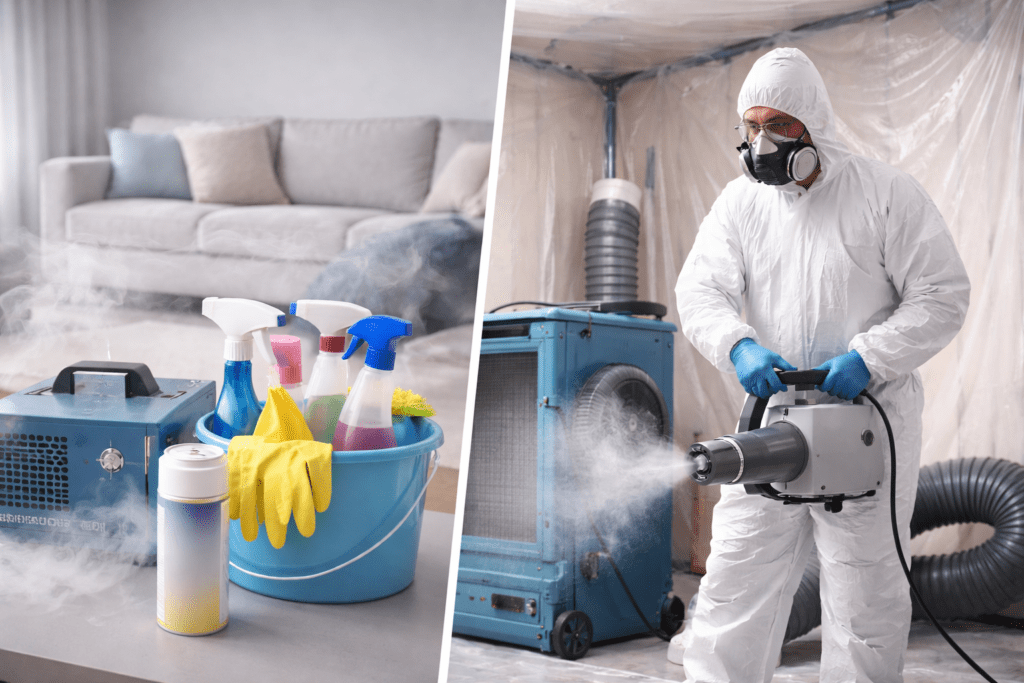
    Professional 2026 remediation succeeds by combining source removal, material evaluation, controlled air chemistry, airflow management, and post-remediation verification rather than masking smells with consumer products.


    What 2026 Professionals Do Differently (And Why It Works)

    1. Source Removal Comes First—Always

    Professionals remove:

    • Biological material
    • Contaminated porous contents
    • Impacted structural materials when necessary

    No air treatment works if the source remains.


    2. Material Science Guides Decisions

    Instead of guessing, professionals assess:

    • Absorption depth
    • Material porosity
    • Time-based off-gassing behavior

    This prevents the mistake of “saving” materials that will continue to smell.


    3. Controlled Air Chemistry (Not Guesswork)

    2026 remediation uses:

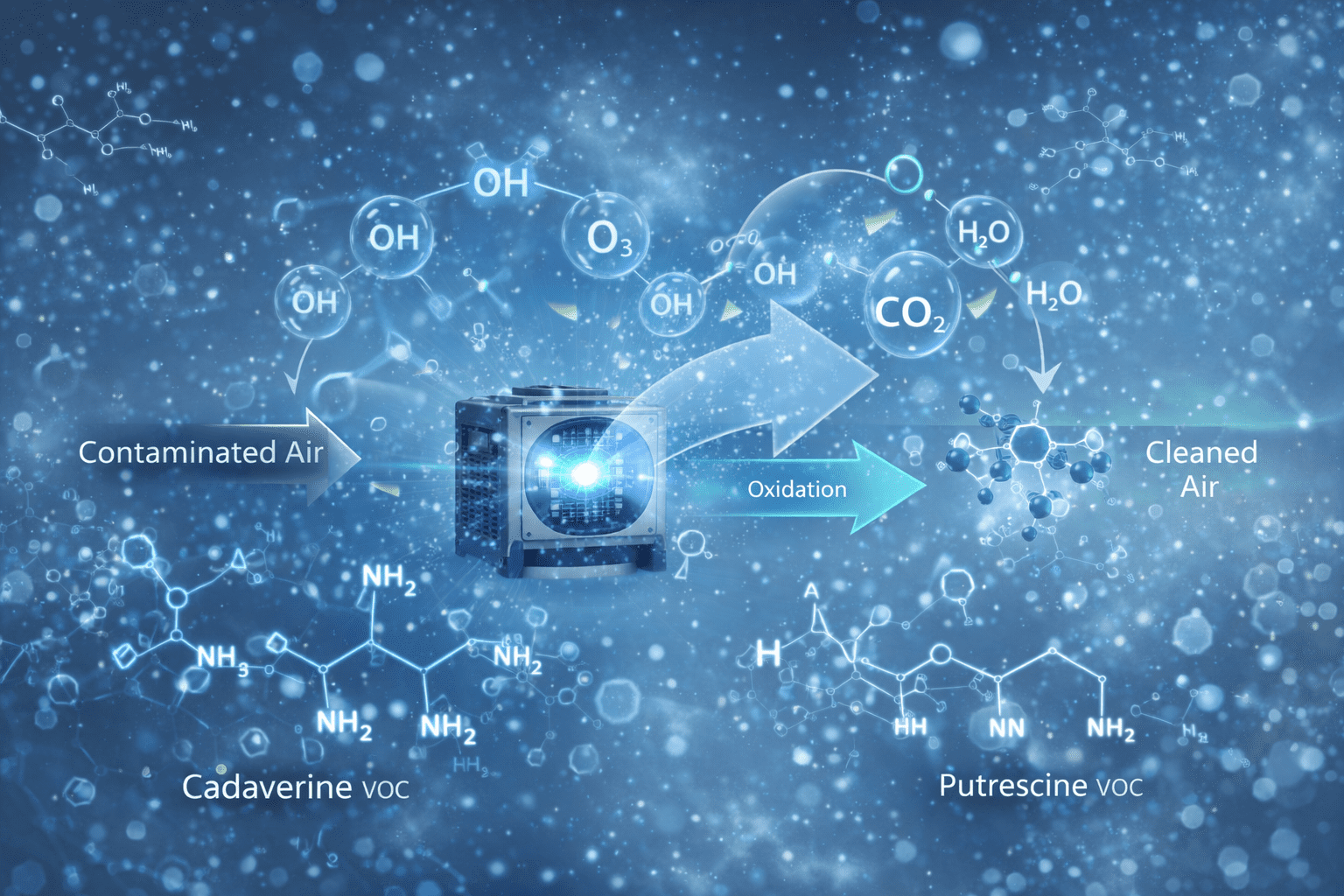
    • Hydroxyl radical generation for continuous neutralization
    • Vapor-phase deodorization for deep penetration
    • Oxidation strategies matched to material tolerance

    These methods break odor molecules apart rather than hiding them.


    4. Airflow and HVAC Are Treated as Odor Pathways

    Professionals manage:

    • Negative air containment
    • Pressure differentials
    • HVAC isolation and evaluation

    DIY methods almost always ignore airflow—which is how odors travel.


    5. Verification Replaces Guessing

    Professionals confirm results through:

    • Extended dwell periods
    • HVAC cycling checks
    • Targeted inspections
    • Documentation and follow-up

    DIY ends when the smell seems “better.”
    Professional remediation ends when it’s stable.

    Also Read ☣️What Is the Full Life-Cycle of a Professional Biohazard Cleanup?


    Why DIY Often Makes Professional Remediation Harder Later

    Unfortunately, some DIY attempts:

    • Push VOCs deeper into materials
    • Spread contamination further
    • Mask true odor sources
    • Delay proper intervention

    This can increase scope, cost, and time once professionals are finally called.


    Absolute Bioremediation’s 2026-Ready Perspective

    Absolute Bioremediation approaches odor elimination as a systems problem, integrating:

    • Biology
    • Chemistry
    • Building science
    • Airflow engineering
    • Verification-based outcomes

    The goal isn’t short-term relief—it’s permanent resolution.


    Conclusion: DIY Isn’t Wrong—It’s Just Not Built for This Problem

    Trauma and death odors persist not because people didn’t try hard enough, but because:

    • The problem is invisible
    • The chemistry is complex
    • The building itself becomes involved

    By 2026 standards, professional remediation succeeds because it respects how odor actually behaves—not how we wish it would.


    FAQs

    1. Why doesn’t DIY odor removal work after a death?
    Because VOCs embed into materials and continue off-gassing beyond surface cleaning.

    2. Can air purifiers permanently remove decomposition odors?
    No. They don’t address embedded or structural odor sources.

    3. Is ozone safe for odor removal?
    Uncontrolled ozone use carries risks and is not a preferred 2026 practice.

    4. Why does odor come back after cleaning?
    Hidden materials and airflow pathways were not addressed.

    5. Can furniture hold decomposition odors?
    Yes. Padding and framing can absorb VOCs deeply.

    6. Does fogging remove odor permanently?
    Not without source removal and verification.

    7. How do professionals stop odor recurrence?
    By combining source removal, air treatment, airflow control, and verification.

    8. Is demolition always required?
    Not always, but sometimes it’s the most reliable solution.

    9. Why does HVAC matter for odor removal?
    It can redistribute odors throughout a building.

    10. When should professionals be called?
    As soon as odor persists beyond basic cleaning or returns after DIY efforts.


  • How HVAC Systems Re-Spread Odors After Trauma Cleanup

    How HVAC Systems Re-Spread Odors After Trauma Cleanup

    How HVAC Systems Trap and Re-Spread Odors After Trauma Cleanup in 2026

    HVAC systems can trap decomposition-related VOCs and re-spread odors through ducts, coils, filters, and negative pressure effects—especially after trauma or unattended death events. 2026 remediation practices prevent recontamination by isolating HVAC zones, using negative air containment, treating ductwork and coils appropriately, and verifying results with post-remediation checks rather than relying on deodorizing sprays.


     The Odor “Ghost” Usually Lives in the Air System

    When clients say, “The smell is back,” the HVAC system is often the first place professionals look—because HVAC doesn’t just move air. It moves molecules.

    After trauma or unattended death remediation, even a properly cleaned room can “re-smell” if the HVAC system:

    • Pulled contaminated air during the event
    • Distributed VOCs throughout ductwork
    • Held odor compounds in filters, coils, or insulation
    • Reintroduced them when conditions changed (heat, humidity, cycling)

    In 2026, HVAC is treated as a primary odor reservoir and distribution network, not an afterthought.


    Why HVAC Makes Odors Worse: VOC Transport + Surface Adsorption

    Odors Aren’t Just Floating—They Stick

    Decomposition-related VOCs and related compounds can:

    • Adsorb onto dust, duct liner, and insulation (cling to surfaces)
    • Absorb into porous components (sink in)
    • Condense on cool evaporator coils or inside air handlers
    • Attach to particulate films on fan blades and plenums

    Every time the system cycles, it can release and redistribute those compounds.


    The Most Common HVAC Odor Reservoirs After Trauma or Death Events

    1. Filters (Especially Low-MERV Filters)

    Filters can capture particles and some odor-laden aerosols—but once saturated, they can become an odor source.

    2026 best practice:

    • Remove and replace impacted filters immediately
    • Upgrade filtration strategy where appropriate (without harming system performance)

    2. Evaporator Coils and Condensate Pans

    Coils are cold surfaces—perfect for condensation and chemical capture.

    If VOCs or biological aerosols contacted the coil area, odor compounds can linger in:

    • Coil fins
    • Drain pans
    • Biofilms
    • Blower compartments

    3. Ductwork Interior Surfaces (Dust Films)

    Even “clean-looking” ducts can hold a thin layer of dust that acts like a VOC sponge.

    This is especially true for:

    • Return-side ductwork
    • Long runs with low airflow
    • Older systems with internal dust accumulation

    4. Duct Liner and Acoustic Insulation

    Porous internal liners are notorious for holding odors.

    In 2026 remediation models:

    • Porous liner is assessed for saturation
    • Replacement is considered sooner because treatment is often unreliable once deeply absorbed

    5. Pressure Imbalances That Pull Odors From Hidden Cavities

    Here’s the weird building-science part: HVAC can act like a vacuum cleaner for hidden smell.

    If the system creates negative pressure, it can pull air from:

    • Wall cavities
    • Crawlspaces
    • Subfloors
    • Attics

    So even if the room is cleaned, the HVAC may “sip” odor from hidden reservoirs and deliver it to occupied spaces.


    2026 HVAC-Focused Remediation Practices That Actually Work

    Step 1: HVAC Isolation During Active Remediation

    Professionals increasingly isolate the system early to prevent distribution.

    Methods include:

    • Temporarily disabling return air intake
    • Sealing registers in affected zones
    • Using containment barriers and pressure control
    • Deploying negative air machines to control airflow direction

    Step 2: HVAC Evaluation: Decide if It’s “Impacted”

    Not every job requires full duct remediation, but skipping evaluation is a common mistake.

    Impact indicators:

    • Odor noticeable near supply vents
    • Odor spikes when HVAC cycles on
    • Visible dust film or debris in returns
    • Evidence of airflow pulling from affected area

    Step 3: Targeted Cleaning and Treatment (Not Random Fogging)

    In 2026, professionals favor targeted, component-appropriate methods:

    • HEPA vacuuming of accessible components
    • Coil cleaning with HVAC-safe protocols
    • Duct cleaning when indicated (with containment)
    • Controlled application of compatible odor neutralizers where appropriate

    The goal is to avoid:

    • Over-wetting duct liners
    • Spreading contaminants deeper
    • Creating residue that becomes a future odor source

    Step 4: Airflow Engineering: “Fix the Pathway”

    Odor recurrence often comes from airflow pulling from the wrong places.

    Best practices include:

    • Confirming pressure relationships (return vs supply dynamics)
    • Sealing bypass leaks in ductwork
    • Ensuring the remediated zone isn’t still feeding the return path
    • Using zonal control strategies when applicable

    Step 5: Post-Remediation Verification (PRV) with HVAC Cycling

    Verification without cycling the HVAC is like testing a boat on dry land.

    2026-quality PRV includes:

    • Running the system through normal cycles
    • Checking odor response near supply/return points
    • Confirming stable indoor conditions after treatment
    • Documenting outcomes and next-step recommendations if needed

    Why DIY HVAC “Odor Fixes” Often Backfire

    Common DIY methods include:

    • Scented vent clips
    • Ozone in ducts
    • Random fogging bombs
    • Spraying disinfectant into returns

    Problems:

    • Masking instead of neutralizing
    • Potential material damage
    • Respiratory irritation risk
    • Driving odor compounds deeper into porous components
    • No verification that VOC sources were removed

    DIY attempts often make professional resolution harder and more expensive later.


    Absolute Bioremediation’s 2026-Ready HVAC Odor Control Approach

    Absolute Bioremediation treats HVAC as part of the remediation ecosystem by integrating:

    • Isolation to prevent spread
    • System evaluation to identify reservoirs
    • Targeted component remediation
    • Airflow management to prevent re-pull
    • Verification after cycling

    This approach prevents the classic “it came back when the heat turned on” scenario.


    Conclusion: If Air Moves, Odor Moves—So HVAC Must Be Part of the Plan

    Trauma and death odors don’t just “hang in the room.”
    They migrate, embed, and hitch rides on airflow.

    By 2026 best practices, true odor elimination means:

    • source removal
    • structural and material treatment
    • and HVAC-aware remediation with verification.

    That’s how professionals make “gone” actually mean gone.


    FAQs

    1. Can HVAC systems spread decomposition odors?
    Yes. HVAC airflow can distribute VOCs through ductwork and vents if the system was exposed.

    2. Why does the smell get worse when the heat or AC turns on?
    Cycling can release trapped compounds from ducts, coils, filters, or insulation.

    3. Do ducts need to be cleaned after trauma cleanup?
    Not always, but they should be evaluated if odors appear near vents or recur during HVAC operation.

    4. What parts of HVAC hold odors the most?
    Filters, coils, return ducts, dust films, and porous duct liner are common reservoirs.

    5. Is fogging the HVAC a good solution?
    Blanket fogging can be ineffective or risky if it spreads residue or wets porous liners. Targeted methods are preferred.

    6. Can HVAC pull odor from walls or crawlspaces?
    Yes. Pressure imbalances can draw air from cavities and reintroduce odors into living spaces.

    7. What is HVAC isolation during remediation?
    It’s temporarily sealing or controlling the system to prevent odor migration and contamination spread.

    8. Are air scrubbers the same as HVAC filters?
    No. Air scrubbers are standalone units that clean room air, often using HEPA filtration, while HVAC filters are part of the building system.

    9. How do professionals verify HVAC-related odor removal?
    They cycle the HVAC system and assess odor response at vents and returns after remediation steps are completed.

    10. Can recurring odor mean the cleanup was incomplete?
    It can. Recurrence often indicates hidden VOC reservoirs or HVAC involvement that wasn’t fully addressed.


  • Why Odors Return After Trauma Cleanup & How 2026 Stops It

    Why Odors Return After Trauma Cleanup & How 2026 Stops It

    Why Odors Return After Trauma Cleanup—and How 2026 Remediation Practices Prevent It

    Odors return after trauma or death cleanup when hidden VOC reservoirs, structural absorption, or air system contamination are not fully addressed. Modern 2026 remediation practices prevent recurrence by combining source removal, material science analysis, advanced air chemistry, HVAC isolation, and post-remediation verification rather than relying on single-step deodorization.


    When “Smells Gone” Isn’t Actually Gone

    One of the most common—and frustrating—experiences after trauma or death cleanup is this:

    “It was fine for weeks… and then the smell came back.”

    This isn’t failure. It’s chemistry, physics, and building science asserting themselves after incomplete remediation.

    As of 2026, the industry has moved beyond surface-level odor control. True professionals now treat odor recurrence as a predictable system behavior, not a mystery.


    The Real Reason Odors Return: Secondary VOC Reservoirs

    Odor Is Stored, Not Just Released

    When decomposition occurs, odor-causing VOCs don’t stay politely in the air. They migrate and embed into:

    • Subflooring and joists
    • Drywall paper backing
    • Insulation and vapor barriers
    • HVAC duct lining and coils
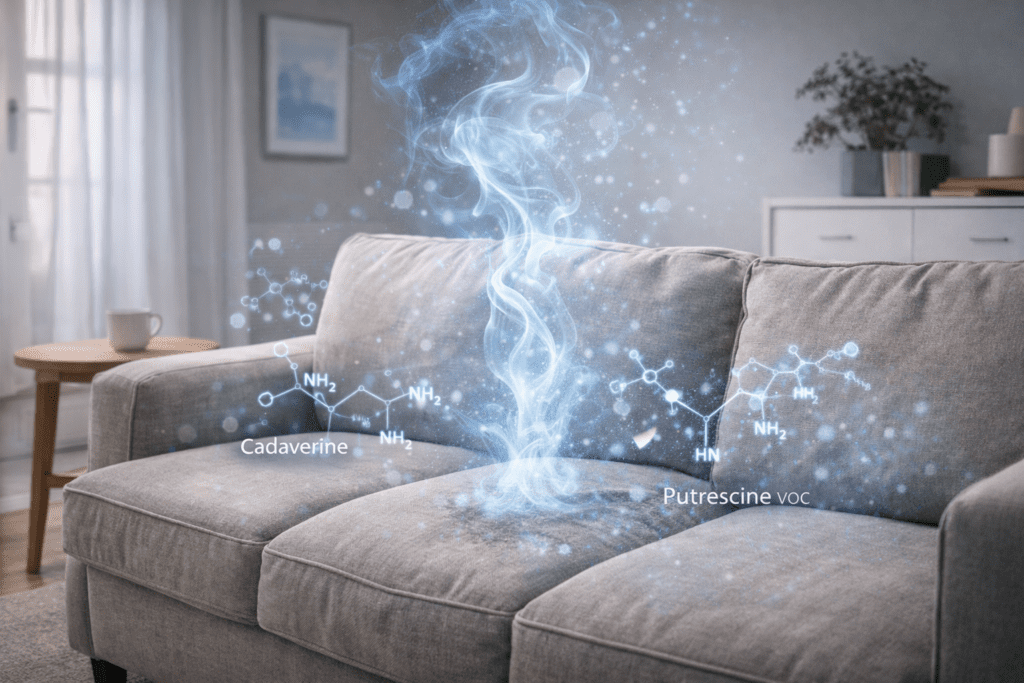
    • Furniture frames and composite materials

    These materials act as chemical sponges. Even after cleaning, they continue off-gassing—sometimes triggered by heat, humidity, or air movement weeks later.

    Also Read ☣️The Science of Odor Neutralization After Trauma or Death


    Why Legacy Cleanup Models Fail Long-Term

    Traditional remediation often stops at:

    • Visible source removal
    • Basic cleaning and deodorizing
    • Short-term air treatment

    What it misses:

    • Vapor migration pathways
    • Porous material chemistry
    • Pressure-driven airflow behavior
    • HVAC recirculation loops

    By 2026 standards, this is no longer considered complete remediation.


    The 2026 Remediation Shift: From Cleanup to Environmental Control

    Modern remediation evaluates how deeply VOCs have bonded, not just whether a surface “looks clean.”

    1. Material Science–Driven Demolition Decisions

    Modern remediation evaluates how deeply VOCs have bonded, not just whether a surface “looks clean.”

    Professionals now assess:

    • Adsorption vs absorption depth
    • Composite material saturation thresholds
    • Time-based off-gassing curves

    This prevents the common mistake of leaving odor-loaded materials in place.


    2. Zonal Air Management (Not Whole-Building Guesswork)

    2026 practices rely on zoned containment, not blanket treatment.

    This includes:

    • Negative pressure mapping
    • Controlled air pathways
    • Compartmentalized remediation zones

    Odor is treated where it lives—not where it wanders.


    3. Advanced Hydroxyl & Oxidation Blending

    Instead of relying on a single technology, modern remediation stacks:

    • Hydroxyl radical generation for continuous neutralization
    • Targeted vapor-phase chemistry for deep penetration
    • Controlled oxidation cycles matched to material sensitivity

    This layered approach prevents rebound odors caused by partial molecular breakdown.


    4. HVAC Isolation and Remediation as Standard Practice

    By 2026, HVAC systems are no longer optional considerations.

    Best practices include:

    • Temporary system isolation
    • Duct and coil evaluation
    • Targeted internal neutralization
    • Filter and liner replacement when necessary

    If air moves, odor moves. Modern remediation treats HVAC as a primary vector.


    5. Post-Remediation Verification (PRV) Becomes the Norm

    Professional firms now verify outcomes rather than rely on human smell alone.

    Verification methods include:

    • Extended dwell observation periods
    • Targeted re-entry testing
    • VOC trend monitoring (when applicable)
    • Pressure and airflow validation

    This step separates professional remediation from cosmetic cleanup.

    Also Read ☣️What Families and Property Managers Need to Know About Unattended Death Cleanup


    Why Odor “Comes Back” After DIY or Budget Cleanup

    In nearly all recurring cases, the cause is one of the following:

    • Structural absorption underestimated
    • Vapor pathways ignored
    • HVAC contamination untreated
    • Air chemistry applied without source removal
    • Insufficient treatment duration

    Odor didn’t return—it was never fully resolved.


    Absolute Bioremediation’s 2026-Ready Approach

    Absolute Bioremediation operates under a future-proof remediation model, integrating:

    • Chemical odor neutralization
    • Building science diagnostics
    • Airflow engineering
    • Material-specific treatment protocols
    • Verification-based clearance

    The result is not “smells better today,” but chemically stable, long-term resolution.


    Conclusion: Permanent Odor Control Is Predictable—If You Respect the Science

    Recurring odor isn’t mysterious. It’s the result of:

    • Complex chemistry
    • Porous materials
    • Air movement
    • Time

    By 2026 standards, professionals don’t chase smells—they eliminate the systems that allow them to exist.

    That’s the difference between cleanup and true environmental remediation.


    People Also Ask

    1. Why does odor return weeks after trauma cleanup?
    Because absorbed VOCs continue off-gassing from untreated materials.

    2. Can temperature changes cause odor to come back?
    Yes. Heat and humidity accelerate VOC release from porous materials.

    3. Is demolition always required to stop odor?
    Not always, but material evaluation determines when removal is necessary.

    4. How does HVAC contribute to odor recurrence?
    Ductwork and airflow redistribute trapped odor compounds.

    5. Are 2026 remediation methods different from older practices?
    Yes. They focus on systems, verification, and long-term stability.

    6. Can air treatment alone permanently remove odors?
    No. Source removal and material treatment are essential.

    7. How long should odor remediation last?
    As long as required to neutralize active off-gassing—not a preset timeframe.

    8. What is post-remediation verification?
    A confirmation process ensuring odor elimination is stable over time.

    9. Do professional companies guarantee odor removal?
    Reputable firms base outcomes on process completeness, not masking.

    10. What makes Absolute Bioremediation’s approach different?
    A science-based, future-ready remediation model designed to prevent recurrence.


  • The Science of Odor Neutralization After Trauma or Death

    The Science of Odor Neutralization After Trauma or Death

    The Science of Odor Neutralization After Trauma or Death: Why Smells Linger and How Professionals Eliminate Them

    Decomposition odors persist because they are made of complex, volatile organic compounds (VOCs) that embed into air, surfaces, and building materials. Professional trauma and death remediation eliminates these odors through a layered scientific approach using source removal, hydroxyl generators, vapor-phase deodorizers, negative air containment, and controlled air remediation—not mass

    king agents or air fresheners.

    Why These Odors Are So Difficult to Eliminate

    After a traumatic event or unattended death, one of the most distressing outcomes for property owners is odor. Not just unpleasant smells—but deeply penetrating, persistent odors that seem to cling to walls, HVAC systems, and even time itself.

    These odors are not “bad air.” They are chemical byproducts of biological decomposition, and removing them requires far more than cleaning products or ventilation. This is where science—not scent—becomes the deciding factor.

    At Absolute Bioremediation, odor elimination is treated as a chemical and environmental engineering problem, not a cosmetic one.


    The Chemistry of Decomposition Odors: VOCs and Off-Gassing Explained

    What Actually Causes Decomposition Odors?

    When human tissue breaks down, it releases hundreds of volatile organic compounds (VOCs), including:

    • Cadaverine
    • Putrescine
    • Sulfur-containing compounds (thiols, mercaptans)
    • Amines and organic acids
    • Ketones and aldehydes

    These compounds are:

    • Extremely small at the molecular level
    • Highly mobile in air
    • Chemically reactive
    • Capable of bonding to porous materials

    That’s why decomposition odors:

    • Penetrate drywall, wood, concrete, fabrics, and insulation
    • Become embedded inside HVAC systems
    • Re-emerge weeks or months later through off-gassing

    Also Read ☣️ The Biology of Biohazards: Pathogens, Decomposition Science & Scene Contamination | Absolute Biohazard Remediation


    Why Traditional Cleaning and Air Fresheners Fail

    Masking vs. Neutralization

    Air fresheners and ozone sprays do not eliminate VOCs. They simply:

    • Add fragrance molecules
    • Temporarily overwhelm human smell receptors
    • Leave the original compounds untouched

    As soon as the fragrance dissipates, the odor returns.

    Professional remediation focuses on molecular neutralization, not concealment.


    Step One: Source Removal Is Non-Negotiable

    No technology works unless the source is removed.

    This includes:

    • Biological material (tissue, blood, fluids)
    • Contaminated porous materials (carpet, padding, drywall, insulation)
    • Impacted furnishings
    • Bio-absorbed building components when necessary

    If odor compounds remain in place, they will continue to off-gas—regardless of treatment.


    Advanced Air Remediation Technologies Used by Professionals

    Hydroxyl Generators: Safe, Continuous Oxidation

    Hydroxyl generators produce hydroxyl radicals (•OH), the same molecules created naturally by sunlight in the atmosphere.

    They work by:

    • Reacting with VOCs at the molecular level
    • Breaking chemical bonds that cause odor
    • Rendering compounds non-odorous and inert

    Why professionals use them:

    • Safe for occupied spaces
    • Effective for long-term odor neutralization
    • Ideal for residential and commercial environments

    Vapor-Phase Deodorizers: Penetration Where Cleaning Can’t Reach

    Vapor-phase deodorization releases engineered compounds that:

    • Travel with airflow
    • Penetrate porous materials
    • Chemically bond with odor molecules
    • Permanently neutralize them

    This is critical for:

    • Wall cavities
    • Subflooring
    • HVAC systems
    • Structural voids

    These are not fragrances. They are reactive neutralizers.


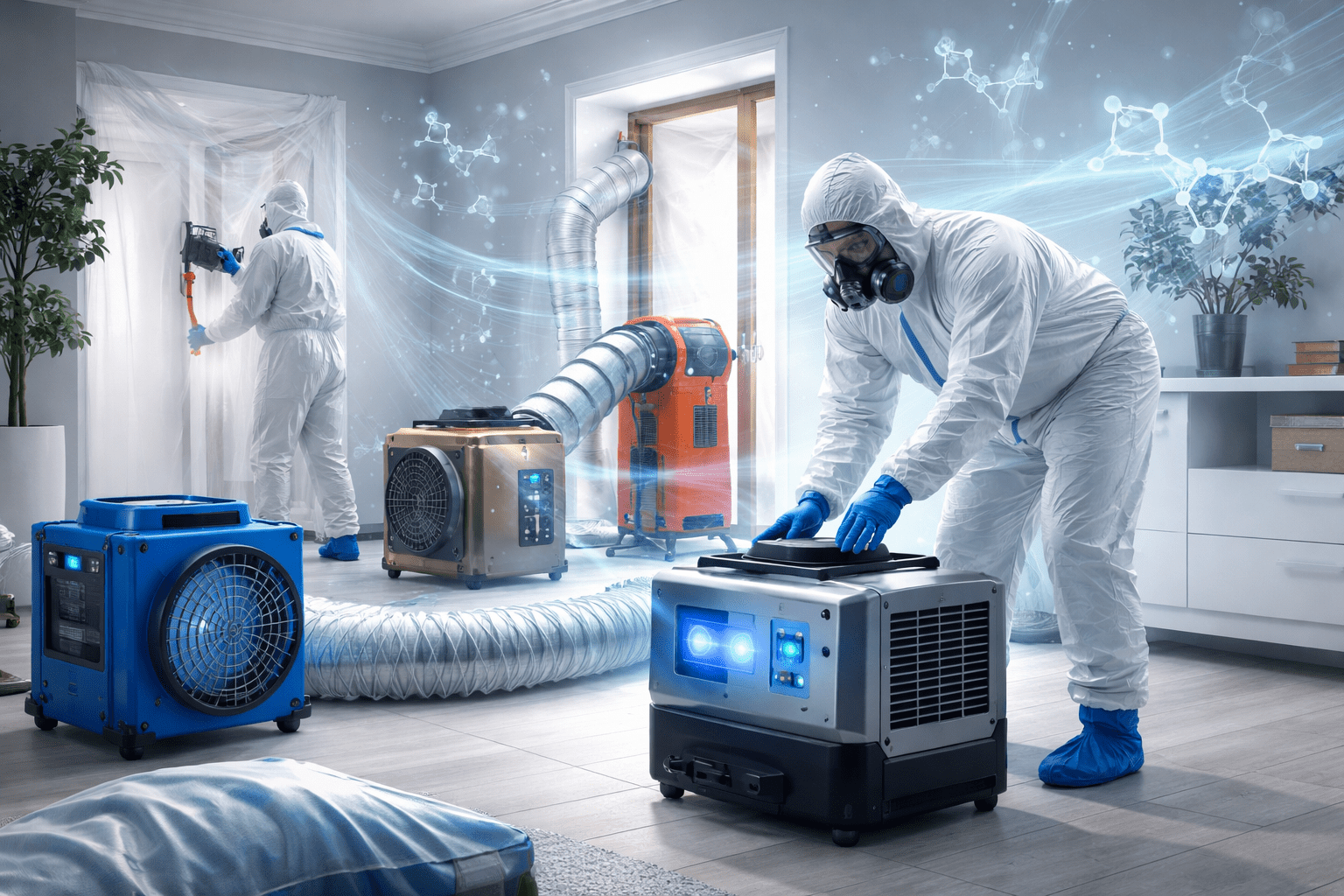
    Negative Air Containment: Controlling Odor Migration

    Negative air machines create pressure differentials that:

    • Prevent odor spread to clean areas
    • Capture airborne VOCs
    • Filter air through HEPA systems
    • Support safe demolition and removal

    This step protects:

    • Adjacent living spaces
    • Other units in multi-family buildings
    • Workers and occupants

    HEPA Filtration and Air Scrubbing

    High-Efficiency Particulate Air (HEPA) filtration:

    • Captures microscopic airborne particles
    • Removes aerosolized biological matter
    • Supports overall air quality restoration

    While HEPA alone does not neutralize VOCs, it is essential as part of a multi-layered remediation strategy.


    Why Odors Sometimes “Come Back”

    Reoccurring odor usually means:

    • Hidden porous materials were missed
    • Structural absorption was underestimated
    • HVAC contamination wasn’t addressed
    • Off-gassing continues from untreated areas

    Professional remediation anticipates this by:

    • Using moisture and air movement analysis
    • Mapping odor pathways
    • Applying extended treatment cycles
    • Verifying results before clearance

    Also Read ☣️What Is the Full Life-Cycle of a Professional Biohazard Cleanup?


    The Science-Based Approach at Absolute Bioremediation

    Absolute Bioremediation approaches odor elimination as a systemic environmental problem, combining:

    • Biological source removal
    • Material science evaluation
    • Chemical neutralization
    • Controlled airflow engineering
    • Post-remediation verification

    The goal is not “smells better today,” but chemically resolved, permanently neutralized air and surfaces.


    Conclusion: Odor Is a Chemical Problem, Not a Sensory One

    Decomposition odors are complex because biology is complex. Eliminating them requires knowledge of chemistry, airflow dynamics, material absorption, and time-based off-gassing—not perfumes or guesswork.

    True remediation doesn’t hide odor.
    It destroys it at the molecular level.

    That’s the difference between cleaning and professional bioremediation.


    FAQ

    1. Why do decomposition odors last so long?
    Because VOCs embed into porous materials and continue to off-gas over time.

    2. Can air fresheners remove death odors?
    No. They only mask odors temporarily without neutralizing the chemicals.

    3. What are VOCs in decomposition?
    They are volatile organic compounds released during tissue breakdown that cause strong odors.

    4. Are hydroxyl generators safe indoors?
    Yes. They are safe for occupied spaces and mimic natural atmospheric processes.

    5. Does ozone work for odor removal?
    Ozone can be hazardous and is not appropriate for occupied environments; professionals use safer alternatives.

    6. Why does odor return after cleaning?
    Hidden materials or structural absorption may continue releasing odor compounds.

    7. Can HVAC systems spread decomposition odors?
    Yes. Ductwork can trap and redistribute odor compounds if not treated.

    8. How long does professional odor remediation take?
    It varies from days to weeks depending on severity and material absorption.

    9. Is odor removal included in trauma cleanup?
    Yes. True trauma remediation always includes odor neutralization.

    10. How do professionals confirm odor elimination?
    Through air monitoring, extended observation, and controlled re-entry verification.


  • What Families and Property Managers Need to Know About Unattended Death Cleanup

    What Families and Property Managers Need to Know About Unattended Death Cleanup

    First Steps After Discovery: What Do You Do First?

    Discovering an unattended death can be overwhelming. The first step is to immediately contact local authorities. Once the scene is cleared by law enforcement or the medical examiner, a professional biohazard remediation company should be called.

    Why You Should Never Attempt Cleanup Yourself

    Unattended death scenes often contain biohazards such as bloodborne pathogens, bacteria, and viruses. Attempting to clean without proper training and equipment not only poses serious health risks but may also result in incomplete remediation that leaves lasting damage and odor.

    The Role of Professional Cleanup Services

    Professional remediation teams, like Absolute Biohazard Remediation are trained to:

    • Remove hazardous biological materials safely.
    • Thoroughly disinfect and sanitize all affected areas.
    • Address deep odors that penetrate flooring, walls, and air systems.
    • Ensure regulatory compliance and proper disposal of biohazard waste.

    Guidance for Property Managers and Landlords

    For rental units or managed properties, unattended deaths present unique challenges. Landlords are often responsible for ensuring the property is remediated before it is safe for future occupancy. Partnering with a certified biohazard remediation company protects both tenants and the property’s reputation.

    Emotional Considerations for Families

    Beyond the physical cleanup, families often face emotional trauma. Having a compassionate professional handle the process allows loved ones to focus on grieving and healing instead of reliving the distress of the scene.

    A Partner You Can Trust

    Absolute Biohazard Remediation understands the sensitivity of these situations. We respond quickly, work discreetly, and provide clear communication throughout the process — helping both families and property owners move forward safely.

  • Odor Removal and Remediation After an Unattended Death

    Odor Removal and Remediation After an Unattended Death

    Understanding the Source of Persistent Odors

    When an unattended death occurs, biological processes begin to affect the surrounding environment. Fluids and organic matter can seep into flooring, subfloors, drywall, and even HVAC systems. This is why odors are not just surface-level problems — they are deeply embedded issues that require professional remediation.

    Why Odors Can’t Be Masked or “Cleaned Away”

    Household cleaners, sprays, or DIY odor solutions are ineffective. While they may temporarily mask the smell, the source remains. Left untreated, odor molecules continue to release into the air, creating an ongoing health hazard and emotional distress.

    Specialized Odor Remediation Techniques

    At Absolute Biohazard Remediation, we use advanced remediation strategies such as:

    • Enzyme treatments that break down organic material at the molecular level.
    • ClO2 Vapor Treatments to neutralize odor particles in the air.
    • Deep structural cleaning and sealing of contaminated surfaces.
      These methods ensure not just odor removal but full environmental restoration.

    Protecting Health and Property Value

    Odors from an unattended death are more than unpleasant — they may indicate lingering bacteria and pathogens. For property managers, landlords, and families, fast professional intervention preserves both health and the property’s long-term value.

    Compassionate Support During a Difficult Time

    At Absolute Biohazard Remediation, we approach odor removal with professionalism and compassion. Our team works discreetly and thoroughly, ensuring the property is not only safe but also restored to a place of dignity and comfort.

  • Crime Scene & Unattended Death Cleaning Requires Experience and Compassion

    Crime Scene & Unattended Death Cleaning Requires Experience and Compassion

    Public Service or Private, We Come to Every Traumatic Scene Call

    ABR Logo - Red over black

    When tragedy strikes, the aftermath can be overwhelming—not just emotionally, but physically. The need for crime scene or unattended death cleanup often comes suddenly and unexpectedly. For many homeowners, property managers, first responders, and business owners in Upstate New York and the Hudson Valley, it’s the first time they’ve ever faced this type of biohazard situation.

    This isn’t just a cleanup. It’s a restoration of safety, dignity, and peace of mind.


    Why Crime Scene Cleanup Isn’t Just “Cleaning”

    Cleaning up after a suicide, homicide, or unattended death is a specialized process. It involves far more than bleach and elbow grease. These scenes often contain blood, bodily fluids, and other biohazards that pose real health risks if not handled correctly.

    Professional trauma scene cleaners must follow OSHA and EPA regulations, wear proper PPE, and know how to contain and safely remove all biohazardous materials. But beyond that, they need to act with compassion, discretion, and care.


    The Hidden Dangers of Improper Cleanup

    Whether it’s a home, business, or apartment, trauma scenes can leave behind biological matter that:

    • Harbors pathogens like hepatitis or MRSA
    • Causes lingering odors
    • Damages flooring, drywall, and HVAC systems
    • May be legally required to be professionally remediated

    Attempting to clean such a site without proper training and equipment can expose individuals to serious health risks and lead to further property damage. That’s why professional remediation is not only recommended—it’s often essential.


    Experience Matters—Here’s Why

    At Absolute Biohazard Remediation, we bring years of specialized training and field experience to every call. From suicides to unattended deaths to violent crime scenes, we’ve seen the hardest moments—and handled them with respect and professionalism.

    Our team understands that when you call us, it’s not “just a job.” It’s someone’s loved one, someone’s home, someone’s life interrupted.

    We arrive promptly, work discreetly, and handle every situation with the seriousness it deserves. We also work directly with property managers, law enforcement, funeral homes, and insurance providers to streamline the process and reduce stress.


    Compassion: The Other Half of the Job

    Biohazard remediation isn’t only about sanitization—it’s about restoring peace to those left behind.

    We understand grief. We understand shock. And we know that how we treat people during these moments matters.

    When working with grieving families, property owners, or traumatized tenants, our technicians speak with empathy, maintain confidentiality, and offer guidance without pressure. That human touch makes all the difference during a time of loss.


    Who We Serve in Upstate NY & Hudson Valley

    Whether you’re a first responder, a homeowner, a property manager, or a business owner, we’re here to help.

    We commonly assist with:

    • Police, fire, and EMS referrals
    • Residential trauma scenes
    • Rental and commercial properties
    • Senior and assisted living facilities
    • Motel, hotel, and Airbnb sites
    • Public spaces and vehicles

    Our service area includes Albany, Schenectady, Saratoga, Kingston, Poughkeepsie, Hudson, and surrounding areas across the Hudson Valley and Capital Region.


    What to Expect When You Call

    1. Immediate Response: We’re available 24/7 to take your call and dispatch a technician.
    2. On-Site Assessment: We’ll evaluate the scene and provide a transparent, no-pressure quote.
    3. Discreet Cleanup: We use unmarked vehicles and take great care to maintain your privacy.
    4. Certified Biohazard Removal: We clean, disinfect, deodorize, and safely dispose of all biohazardous material.
    5. Final Walkthrough: We ensure your space is safe, clean, and restored—physically and emotionally.

    You’re Not Alone—We’re Here When You Need Us

    If you’ve been faced with an unexpected tragedy, don’t take on the burden alone. Let a professional, compassionate team help you through.

    At Absolute Biohazard Remediation, we’re honored to serve those in Upstate NY and the Hudson Valley during life’s most difficult moments. We don’t just clean—we care.


    Need Help Now?
    📞 Call us 24/7 or visit AbsoluteBioRemediation.com to schedule a consultation or emergency dispatch.