Category: Hoarding

  • Do Animal Infestations in Hoarded Apartments Create Serious Biohazard Risks?

    Do Animal Infestations in Hoarded Apartments Create Serious Biohazard Risks?

    When Clutter Becomes a Zoonotic Disease Environment

    Severe hoarding conditions create more than unsanitary interiors. They create ecological systems where rodents, insects, and parasites establish stable populations.

    In a detached structure, that risk is contained. In a multi-unit building, it becomes shared.

    Wall voids, plumbing penetrations, HVAC pathways, elevator shafts, and trash chutes allow pest migration. What begins as one tenant’s hoarded environment can rapidly affect adjacent apartments, common areas, and mechanical systems.

    For property managers across Ulster, Dutchess, Orange, Rockland, Putnam, Westchester, Columbia, Delaware, Greene, Albany, Schenectady, Saratoga, Warren, and Washington Counties, this is no longer viewed as a housekeeping issue. It is a public health and compliance liability.


    Rodent Population Dynamics in Hoarded Units

    Rodents thrive in environments with:

    • Consistent food access
    • Protected nesting material
    • Minimal disturbance
    • Dense structural concealment

    Hoarded apartments provide all four.

    Stacks of textiles and paper create thermal insulation for nesting. Food debris supports rapid reproduction cycles. In multi-unit buildings, once rodents establish harborage in one apartment, they expand through shared structural cavities.

    Urban rodent population growth across New York State has intensified in recent years due to waste density and climate variability. Severe hoards act as localized population accelerators.


    Hantavirus: Airborne Risk From Rodent Droppings

    Apartment owner hospitalized with respiratory illness, illustrating severe health risks linked to rodent-borne diseases in contaminated housing

    Hantavirus pulmonary syndrome is associated with inhalation of aerosolized particles from rodent urine, droppings, or nesting material.

    In hoarded apartments, rodent waste often accumulates undetected beneath piles of debris. Disturbance during improper cleaning can aerosolize viral particles.

    Symptoms may initially resemble influenza but can rapidly progress to respiratory distress.

    Containment, respiratory protection, and HEPA filtration are critical during remediation. Casual cleaning without biohazard protocol increases exposure risk for occupants, maintenance staff, and adjacent tenants.


    Leptospirosis From Rodent Urine Contamination

    Leptospirosis is a bacterial infection transmitted through contact with water or materials contaminated by rodent urine.

    In cluttered apartments, urine can:

    • Soak into subfloor materials
    • Penetrate porous insulation
    • Remain active in damp environments
    • Spread via foot traffic tracking

    In multi-unit housing, plumbing penetrations allow migration between units. Moisture retention beneath clutter amplifies bacterial persistence.

    For property managers, visible rodent activity combined with water intrusion may constitute a habitability issue requiring documented remediation.


    Flea, Cockroach, and Arthropod-Borne Pathogens

    Macro view of flea infestation on worn apartment floorboards, showing debris and contamination risks in multi-unit housing.

    Rodents introduce fleas. Clutter supports cockroaches. Organic debris sustains both.

    These vectors can carry or mechanically transmit pathogens such as:

    • Salmonella species
    • Murine typhus (flea-associated)
    • Allergenic proteins triggering asthma

    Cockroach allergens are strongly associated with increased asthma severity in multi-family housing. In buildings with shared ventilation, allergen particles may migrate between units.

    In 2026 compliance frameworks, pest presence is increasingly evaluated alongside mold and moisture when assessing housing quality.


    Parasite Load in Cluttered Environments

    Beyond insects and rodents, parasitic organisms may thrive in hoarded environments:

    • Roundworms
    • Tapeworm eggs
    • Mite populations
    • Secondary bacterial colonization

    Zoonotic parasites can infect humans through contaminated surfaces, dust inhalation, or contact with rodent feces.

    Improper debris removal can aerosolize eggs and microscopic particles, distributing contamination beyond the source area.


    Secondary Contamination in Multi-Unit Structures

    The engineering of apartment buildings amplifies risk:

    • Negative pressure in hallways draws air from units
    • Stack effect moves air vertically
    • Shared duct systems redistribute particulates
    • Maintenance activity transfers contaminants

    If a hoarded apartment undergoes non-contained cleanout, airborne particulates may enter hallways or adjacent units.

    Professional remediation incorporates:

    • Containment barriers
    • Negative air machines with HEPA filtration
    • Controlled removal sequencing
    • Surface and sub-surface disinfection
    • Waste transport protocols

    This protects not only the affected tenant but the entire building population.


    Fire Code and Structural Intersection

    Firefighter suppressing a paper stack fire inside a hoarded apartment, illustrating fire-load risks in multi-unit housing.

    Animal nesting materials combined with paper hoards increase combustible load density.

    Rodent-chewed wiring further elevates ignition risk.

    Fire departments across New York counties treat severe hoards as life safety hazards when egress is blocked or ignition sources are compromised.

    Thus, zoonotic contamination and fire safety become intertwined compliance concerns.


    Insurance and Liability Considerations in 2026

    Insurance carriers increasingly assess:

    • Documentation of pest mitigation
    • Evidence of owner response to hazardous conditions
    • Recurrence prevention measures
    • Cross-unit contamination claims

    Failure to act on known rodent infestation tied to hoarding may expose owners to claims of negligence if adjacent tenants experience health impacts.

    Preventive, documented remediation significantly reduces that exposure.


    Cosmetic Pest Control vs. Biohazard Remediation

    Standard extermination addresses active pests. It does not address:

    • Accumulated pathogen reservoirs
    • Urine-saturated materials
    • Airborne contamination
    • Embedded parasite load
    • Subfloor penetration

    Biohazard remediation evaluates contamination depth and removes affected materials when necessary.

    In multi-unit housing, this distinction determines whether contamination is eliminated or simply displaced.


    2026 Compliance Outlook for NY Multi-Unit Buildings

    Public health expectations are rising.

    Tenant awareness of habitability rights continues to increase across Albany, Westchester, Rockland, and surrounding counties. Housing courts increasingly evaluate documentation and response time.

    Severe hoarding cases involving animal contamination now intersect with:

    • Indoor allergen regulations
    • Pest control mandates
    • Fire code enforcement
    • General habitability standards

    For property managers and building owners, proactive intervention protects both tenants and asset value.

    Absolute BioRemediation provides containment-based, compliance-aware biohazard remediation services throughout:

    Ulster County
    Dutchess County
    Orange County
    Rockland County
    Putnam County
    Westchester County
    Columbia County
    Delaware County
    Greene County
    Albany County
    Schenectady County
    Saratoga County
    Warren County
    Washington County

    Early assessment prevents escalation into structural damage, regulatory violation, or tenant litigation.


    People Also Ask

    1. Can rodent droppings in apartments spread airborne disease?
      Yes. Disturbance of contaminated droppings can aerosolize particles capable of transmitting pathogens.

    2. Is hantavirus a risk in New York apartments?
      While uncommon, hantavirus exposure can occur where rodent populations are present and waste accumulates.

    3. How does leptospirosis spread in buildings?
      Through contact with surfaces or moisture contaminated by infected rodent urine.

    4. Can cockroaches transmit disease in multi-unit housing?
      Yes. Cockroaches can mechanically spread bacteria and trigger severe allergic reactions.

    5. Does pest infestation affect neighboring tenants?
      In multi-unit buildings, pests migrate through shared structural spaces.

    6. When is professional remediation required instead of pest control?
      When contamination includes pathogen reservoirs, saturated materials, or cross-unit risk.

    7. Can rodent urine damage subfloors?
      Yes. Urine can penetrate porous materials, requiring material-level remediation.

    8. Are landlords responsible for pest-related health risks?
      Property owners are generally responsible for maintaining habitable conditions free of hazardous infestations.

    9. Can hoarding increase fire risk in apartments?
      Yes. Accumulated combustible materials and rodent-damaged wiring elevate ignition risk.

    10. How can building owners reduce liability in hoarding-related pest cases?
      Through early professional assessment, containment-based remediation, and documented compliance actions.


  • Can Hoarding Microbiology in Multi-Unit Buildings Violate 2026 NY Health Codes?

    Can Hoarding Microbiology in Multi-Unit Buildings Violate 2026 NY Health Codes?

    Why Hoarding in One Unit Becomes a Code Issue for the Entire Building

    Hoarding inside a single-family home is a serious matter. Inside a multi-unit building, it becomes a shared public health liability.

    Apartments do not exist in isolation. They share ductwork, plumbing penetrations, wall cavities, subfloors, and pressure differentials. When clutter accumulates to the point of obstructed sanitation and moisture retention, the interior transforms into a biological amplification chamber. In 2026, with stricter enforcement of mold, pest, and fire safety regulations across New York State, property owners and managers must understand that hoarding is no longer categorized as a “cleaning issue.” It is a building systems and compliance issue.

    For property owners across Ulster, Dutchess, Orange, Rockland, Putnam, Westchester, Columbia, Delaware, Greene, Albany, Schenectady, Saratoga, Warren, and Washington Counties, this distinction matters operationally and legally.


    The Microbial Ecology of Cluttered Apartments

    Interior of a cluttered apartment living room with moderate piles of papers, bookshelves, scattered food containers, and visible debris on the floor.

    Microorganisms thrive where three variables converge: nutrients, moisture, and protection from disturbance. Hoarded apartments provide all three at scale.

    Stacks of paper, textiles, cardboard, food waste, and organic debris form dense material layers that trap humidity. Airflow becomes restricted. Surface cleaning becomes impossible. Relative humidity can exceed 60%, the threshold where fungal growth accelerates. In enclosed microclimates within clutter piles, localized humidity can be significantly higher.

    This environment promotes:

    • Bacterial amplification
    • Mold sporulation
    • Arthropod nesting
    • Rodent harborage
    • Decomposition chemistry

    Unlike visible dirt, microbial colonization expands invisibly, penetrating porous surfaces, subfloor materials, insulation, and wall cavities.

    Also Read ☣️Rodent & Animal Biohazards in Hoarded Properties | NY Remediation


    Bacterial Amplification and Biofilm Development

    Bacteria multiply exponentially when nutrients are abundant. In hoarded units, nutrients originate from:

    • Decomposing food residues
    • Human skin cell accumulation in textiles
    • Pet waste or rodent excrement
    • Organic dust bound in clutter

    As bacterial colonies mature, they produce biofilms—protective matrices that anchor them to surfaces. Biofilms increase resistance to casual cleaning methods and disinfectants.

    In multi-unit buildings, shared ventilation and stack effects can distribute aerosolized bacteria beyond the source apartment. This is particularly concerning in buildings housing elderly, pediatric, or immunocompromised tenants.

    From a compliance standpoint, New York habitability standards require landlords to maintain sanitary conditions that do not endanger occupants. When bacterial proliferation leads to odor, contamination, or cross-unit impact, intervention shifts from optional to necessary.


    Mold Colonization and 2026 Indoor Allergen Enforcement

    Mold is not merely cosmetic staining. It is a regulated indoor allergen hazard.

    New York City’s indoor allergen laws and similar state-level standards require owners of multi-unit dwellings to remediate mold conditions and address moisture sources. Hoarded environments complicate compliance because:

    • Clutter traps moisture against walls and floors
    • Leaks go undetected beneath stored materials
    • HVAC airflow is obstructed
    • Condensation accumulates in stagnant air pockets

    Common indoor molds such as Aspergillus and Penicillium release spores that become airborne during disturbance. In high-density housing, spores can migrate through ductwork and common corridors.

    In 2026, enforcement increasingly evaluates whether the owner acted promptly upon discovery. Failure to remediate a hoarded, mold-amplified unit can trigger violations, tenant complaints, and litigation exposure.

    Also Read ☣️Rodent & Animal Biohazards in Hoarded Properties | NY Remediation


    Parasitic and Arthropod Infestation Dynamics

    image of a cockroach in an uncontrolled area.

    Clutter density creates ideal harborage for pests. Rodents exploit stable nesting zones. Cockroaches thrive in food-rich debris fields. Fleas proliferate in textile piles.

    Beyond nuisance classification, these organisms carry pathogens:

    • Rodents may transmit hantavirus and leptospirosis
    • Cockroaches mechanically spread Salmonella
    • Fleas can carry vector-borne diseases

    In multi-unit buildings, infestations do not respect lease lines. Wall voids and shared plumbing allow migration. From a regulatory perspective, building owners are responsible for controlling infestations that affect tenant health.


    Airborne Pathogen Distribution Through Shared Systems

    The physics of apartment buildings matter.

    Pressure differentials caused by stairwells, elevator shafts, and HVAC systems create vertical and horizontal airflow channels. When clutter is disturbed—by occupants, maintenance, or improper cleaning—dust and microbial particles become airborne.

    Without containment protocols such as negative air pressure, HEPA filtration, and controlled removal sequencing, pathogens can redistribute throughout adjacent units.

    Professional remediation in multi-unit settings must account for building airflow modeling, not simply surface sanitation.

    Also Read ☣️Why Odors Return After Trauma Cleanup & How 2026 Stops It


    Decomposition Chemistry and Toxic By-Products

    Older professor sitting at a desk covered in papers and books, reviewing documents while coughing in a cluttered home office.

    When organic matter accumulates in enclosed environments, decomposition produces volatile compounds including ammonia, sulfur compounds, and methane in micro-concentrations.

    These gases:

    • Irritate respiratory pathways
    • Contribute to chronic odor migration
    • Penetrate porous building materials
    • Bind to subfloor and framing components

    Left untreated, these compounds may require material removal rather than surface treatment to restore safe occupancy.


    Structural and Fire Load Implications

    Although this article focuses on microbiology, structural load and fire load cannot be separated from biohazard risk.

    Residential apartments are engineered for predictable live loads. Severe hoarding can exceed those assumptions, increasing stress on joists and subfloor systems. At the same time, accumulated combustible materials elevate fire load density and obstruct egress routes.

    Fire code enforcement agencies across New York counties increasingly classify extreme hoards as safety violations rather than lifestyle matters.

    For property managers in Albany, Westchester, Rockland, and surrounding counties, early intervention is significantly less costly than structural repair, insurance disputes, or municipal citations.


    Cosmetic Cleaning vs. Biohazard Remediation

    Standard cleaning services address visible debris. They do not evaluate:

    • Microbial penetration depth
    • HVAC contamination
    • Subfloor absorption
    • Airflow-based cross contamination
    • Structural moisture retention

    Professional biohazard remediation involves assessment, containment engineering, PPE protocols, controlled removal, antimicrobial treatment, deodorization, and verification.

    In multi-unit housing, remediation must protect not only the affected unit but the entire building envelope.


    2026 Compliance Outlook for NY Property Owners

    Regulatory trends indicate:

    • Increased indoor air quality scrutiny
    • Stronger enforcement of mold and pest laws
    • Heightened tenant awareness of habitability rights
    • Insurance carrier scrutiny of preventable neglect

    In counties including Ulster, Dutchess, Orange, Putnam, Columbia, Greene, Saratoga, Warren, and Washington, municipal coordination between health departments and code enforcement is tightening.

    The question is no longer whether hoarding is unsanitary. The question is whether failing to remediate it exposes the building owner to regulatory and financial liability.

    From a risk management perspective, early professional remediation is preventive infrastructure protection.


    People Also Ask

    1. Can hoarding in one apartment affect neighboring units?
      Yes. Shared ventilation, wall cavities, and airflow pressure can distribute mold spores, bacteria, and pest populations to adjacent units.

    2. Are landlords responsible for mold in hoarded apartments?
      If mold impacts habitability or other units, landlords are typically required to address the condition under New York housing standards.

    3. How do bacteria spread in multi-unit buildings?
      Through dust disturbance, HVAC systems, shared air pressure pathways, and foot traffic contamination.

    4. Does hoarding increase pest infestations?
      Yes. Clutter creates stable nesting zones for rodents and insects, increasing disease transmission risk.

    5. Can decomposition gases penetrate building materials?
      Volatile compounds can absorb into porous materials, requiring professional remediation beyond surface cleaning.

    6. When is biohazard remediation required instead of cleaning?
      When contamination involves pathogens, bodily waste, decomposition, or cross-unit health risks.

    7. Do NY fire codes address hoarding conditions?
      Yes. Obstructed egress and excessive combustible load can trigger fire code violations.

    8. Is mold from hoarding a public health concern?
      Yes. Mold spores can cause respiratory illness and may spread beyond the source unit.

    9. Can insurance deny claims related to hoarding damage?
      In some cases, insurers may deny claims if damage results from prolonged neglect.

    10. How can property managers reduce liability from hoarding cases?
      Through early reporting, professional assessment, containment-based remediation, and documented compliance actions.


  • What Causes Persistent Odors in Hoarding Properties?

    What Causes Persistent Odors in Hoarding Properties?

    When Odor Becomes the Breaking Point

    In hoarding environments, odor is often the catalyst that forces intervention. Family members may tolerate clutter. Neighbors may overlook exterior neglect. But when deep, penetrating smells migrate beyond the property lines, urgency sets in.

    These odors are not simple “bad smells.” They are complex chemical signatures composed of biological decay gases, microbial volatile organic compounds (mVOCs), ammonia derivatives, sulfur compounds, and long-term off-gassing from saturated building materials. Standard cleaning fails because the source is embedded within porous substrates and structural cavities.

    For property owners, estate managers, landlords, and public health officials across Ulster, Dutchess, Orange, Rockland, Putnam, Westchester, Columbia, Delaware, Greene, Albany, Schenectady, Saratoga, Warren, and Washington Counties, understanding the chemistry behind persistent odor is critical to making informed remediation decisions.

    This is where curiosity must become urgency.


    The Chemistry of Persistent Odor

    1. Volatile Organic Compounds (VOCs)

    VOCs are carbon-based chemicals that evaporate at room temperature. In hoarding properties, VOC sources include:

    • Decomposing food waste
    • Animal waste and urine
    • Mold metabolism (microbial VOCs)
    • Human biofluids
    • Household chemical breakdown
    • Fire residues or nicotine accumulation

    When organic matter decomposes anaerobically (without oxygen), it produces sulfur compounds such as hydrogen sulfide and mercaptans—chemicals detectable at extremely low concentrations. The human nose can detect some sulfur compounds at parts-per-billion levels.

    That means even trace contamination can produce overwhelming odor perception.


    2. Off-Gassing and Material Saturation

    Stack of old, dusty cardboard boxes with water-damaged boxes at the base inside a hoarded garage, illustrating moisture exposure, material deterioration, and structural risk in hoarded properties.

    Porous materials act like sponges at a molecular scale.

    Common saturated materials include:

    • Drywall
    • Subflooring
    • Insulation
    • Carpeting and padding
    • Upholstery
    • HVAC duct lining

    These materials absorb liquids, biological fluids, and VOCs. Over time, trapped compounds slowly re-release into the air—a process called off-gassing.

    Even if surfaces appear clean, the structure itself may be chemically contaminated.

    This is why repainting walls or using fragrance-based deodorizing sprays fails. The underlying substrate continues emitting odor molecules.


    3. Microbial Colonization and Secondary Odor Production

    Moisture retention within cluttered environments creates microclimates ideal for microbial growth.

    Mold and bacteria produce:

    • Alcohols
    • Ketones
    • Aldehydes
    • Terpenes

    These secondary metabolites generate the musty, sour, or sweet-rot odors commonly associated with hoarding properties.

    Until moisture-damaged materials are removed and microbial reservoirs eliminated, odor persistence is inevitable.


    Why DIY and Standard Cleaning Fail

    Traditional cleaning approaches focus on visible soil. Odor persistence is invisible chemistry.

    Common failure points include:

    Surface Cleaning Only
    Bleach or disinfectant applied to surfaces does not penetrate subflooring or wall cavities.

    Odor Masking
    Air fresheners temporarily overwhelm receptors but do not neutralize VOCs.

    Ozone Misuse
    Uncontrolled ozone exposure may temporarily oxidize some compounds, but without source removal, odors return. Improper ozone use can also damage materials and pose respiratory risk.

    Carpet Cleaning Without Removal
    Extraction cleaning cannot correct urine or decomposition contamination that has penetrated padding and subfloor layers.

    Odor problems in hoarding environments are not cleaning problems. They are contamination problems.


    Professional Remediation: Eliminating Odor at the Molecular Source

    Absolute BioRemediation applies a structured, science-based process aligned with evolving public health standards for 2026 and beyond.

    Step 1: Source Identification

    • VOC mapping and moisture detection
    • Assessment of porous material saturation
    • Evaluation of structural impact

    Step 2: Controlled Removal

    • Biohazard material extraction
    • Removal of contaminated porous building materials
    • HEPA-controlled demolition where required

    Source removal is non-negotiable. Odor elimination without removal is scientifically improbable.


    Step 3: Engineering Controls

    • HEPA air scrubbing
    • Negative air pressure containment
    • Controlled ventilation

    These systems prevent cross-contamination and protect adjacent living areas.


    Step 4: Molecular Neutralization

    After physical removal, residual odor compounds are treated using professional-grade methods such as:

    • Hydroxyl radical technology
    • Targeted oxidizing agents
    • Advanced chlorine dioxide applications (when appropriate)
    • Thermal fogging with neutralizing agents

    These approaches chemically alter odor molecules rather than mask them.


    Step 5: Structural Drying and Monitoring

    Persistent odor often correlates with hidden moisture. Structural drying and verification ensure microbial reactivation does not occur.


    The Public Health Dimension

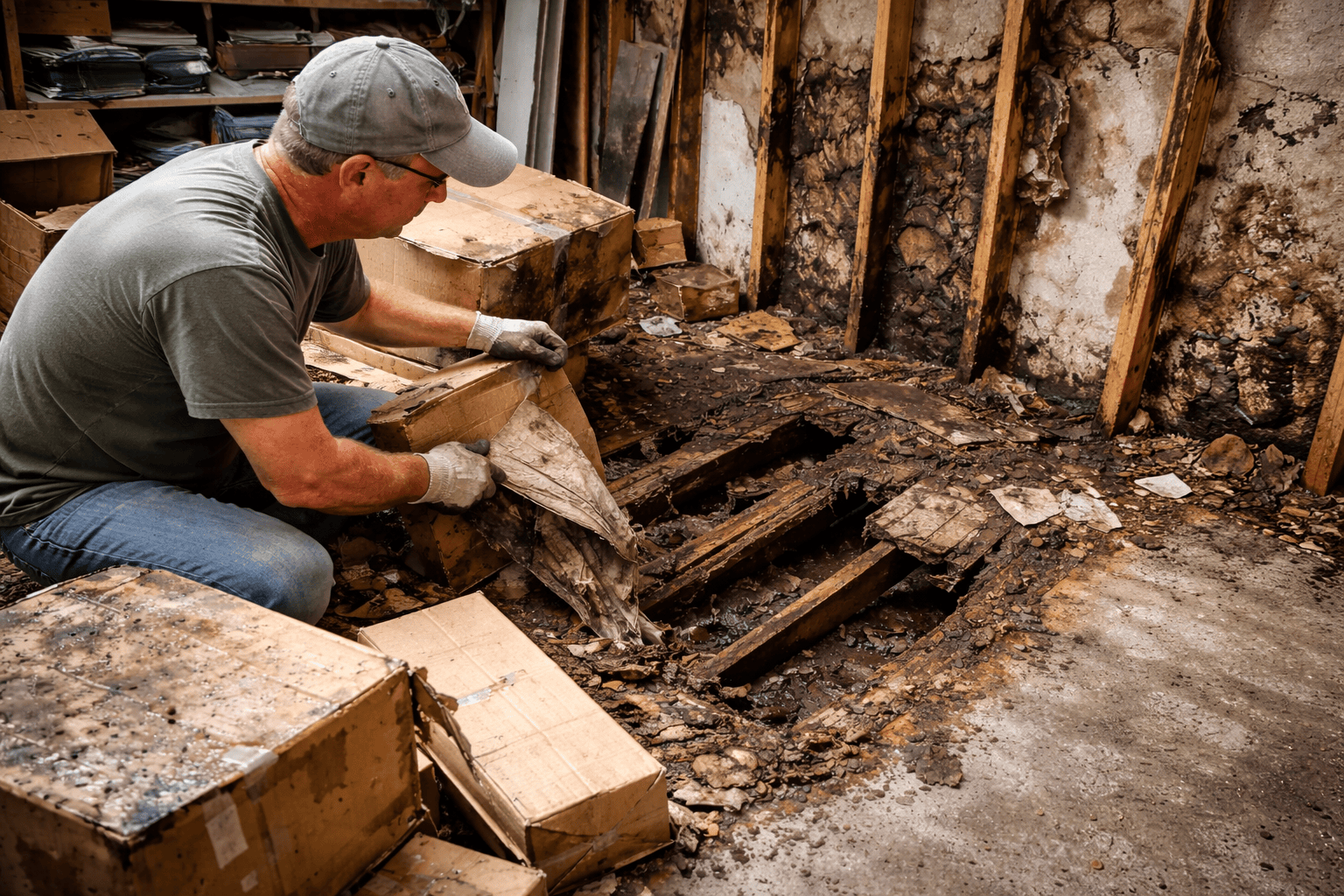
    image of a man finding rotten flooring under boxes as the moisture caused structural damage.

    Odors in hoarding environments are not merely unpleasant. They often indicate:

    • Airborne mold spores
    • Ammonia exposure
    • Bacterial aerosolization
    • Decomposition gases

    Municipal health departments across Westchester County, Albany County, Orange County, Dutchess County, and surrounding regions increasingly recognize chronic indoor contamination as a community health concern.

    With stricter property management regulations and heightened tenant protection standards emerging in 2026, remediation is shifting from reactive cleanup to preventative public health intervention.

    Property owners who delay remediation face escalating costs due to:

    • Structural degradation
    • HVAC contamination
    • Code enforcement actions
    • Reduced property valuation

    Odor is the early warning system. Ignoring it compounds risk.


    Why Odor Persistence Signals Structural Contamination

    If a property smells strongly despite cleaning attempts, one of the following is likely true:

    • Porous materials are saturated beyond salvage
    • Subfloor contamination is present
    • Wall cavities contain microbial growth
    • HVAC systems are distributing VOCs
    • Moisture problems remain unresolved

    Persistent odor is rarely superficial.

    In many hoarding remediation projects across Ulster, Putnam, Rockland, Columbia, Greene, Delaware, Saratoga, Schenectady, Warren, and Washington Counties, full odor resolution required selective structural removal—not cosmetic cleaning.

    That is the distinction between janitorial service and certified biohazard remediation.


    Looking Forward: 2026 Standards and Expectations

    Emerging trends influencing remediation protocols include:

    • Increased indoor air quality (IAQ) monitoring requirements

    • Expanded tenant disclosure regulations

    • Greater insurance documentation scrutiny

    • Data-driven post-remediation verification

    Future-forward remediation requires documentation, containment engineering, and measurable outcomes—not subjective odor assessment.

    Absolute Bioremediation aligns its procedures with these evolving standards to protect property value and public health throughout the Hudson Valley and Capital Region of New York.


    Conclusion: From Curiosity to Urgency

    Odor is chemistry. Chemistry follows physical laws.

    When odor persists, it signals ongoing emission of volatile compounds from contaminated materials. Without source removal and molecular neutralization, those compounds continue cycling through the indoor environment.

    Hoarding property remediation is not about appearance. It is about restoring structural integrity, indoor air safety, and regulatory compliance.

    When odor reaches the point of forcing action, the contamination is already advanced.

    Scientific intervention prevents further structural loss and protects human health.


    (FAQs)

    1. Why do hoarding houses smell so strong even after cleaning?
    Because odor molecules are absorbed into porous materials like drywall, carpet padding, and subflooring, where they continue off-gassing after surface cleaning.

    2. What are VOCs in hoarding properties?
    Volatile organic compounds are carbon-based gases released from decomposing organic material, microbial activity, and contaminated building materials.

    3. Can painting over odor eliminate it?
    No. Paint may temporarily reduce perception, but it does not remove contaminated substrates or neutralize VOC sources.

    4. Is ozone safe for odor removal?
    Improper ozone use can pose respiratory risk and damage materials. It should only be used in controlled professional environments and after source removal.

    5. Why does urine odor return after cleaning?
    Urine often penetrates into padding, subflooring, and framing. Unless those materials are removed or treated at depth, odor will recur.

    6. How long does professional odor remediation take?
    Project timelines vary based on structural contamination but typically range from several days to multiple weeks for severe hoarding cases.

    7. Are hoarding odors a health hazard?
    They may indicate airborne mold spores, ammonia exposure, or bacterial contamination, which can affect respiratory health.

    8. Does insurance cover hoarding odor remediation?
    Coverage depends on policy terms and whether contamination is linked to a covered loss event.

    9. Can HVAC systems spread odor contamination?
    Yes. HVAC systems can distribute VOCs and microbial particles throughout a structure if not professionally cleaned.

    10. When should I call a professional biohazard remediation company?
    When odor persists despite cleaning, when contamination is extensive, or when structural materials are affected.

  • Structural Damage in Hoarded Homes | NY BioRemediation

    Structural Damage in Hoarded Homes | NY BioRemediation

    Structural Compromise in Hoarded Homes: How Does Physical Failure Begin?

    Structural failure in hoarded homes begins when excessive weight loads, chronic moisture retention, and biological contamination overwhelm a building’s original design limits. Over time, floors deflect, framing weakens, fasteners corrode, and porous materials absorb contaminants—allowing damage to penetrate subfloors, wall systems, and foundations, often unnoticed until safety risks become severe.


    When Hoarding Stops Being a Health Issue and Becomes a Physics Problem

    Biology explains what grows in hoarded environments.
    Physics explains what breaks.

    Homes are engineered for predictable loads, controlled moisture, and breathable assemblies. Hoarding disrupts all three at once. As materials accumulate, airflow collapses, moisture lingers, and weight exceeds what residential structures—especially older ones—were ever designed to tolerate.

    At this stage, the issue is no longer cleanliness. It is structural integrity.


    Excessive Weight Load: When Floors and Framing Are Overwhelmed

    Design Limits vs. Hoarding Reality

    Most residential floors are engineered to support approximately 40 pounds per square foot of live load. Hoarded contents—books, paper goods, furniture, appliances, construction debris—can exceed this threshold dramatically.

    In hoarded properties, weight is rarely distributed evenly. Instead, it stacks vertically and concentrates in localized areas, leading to:

    • Floor deflection and sagging
    • Cracked joists and split beams
    • Separation at load-bearing walls
    • Door and window frame distortion

    In older housing stock common throughout Ulster, Columbia, Greene, Delaware, and Warren Counties, historic framing often lacks modern reinforcements, increasing failure risk under sustained overload.


    Stack of old, dusty cardboard boxes with water-damaged boxes at the base inside a hoarded garage, illustrating moisture exposure, material deterioration, and structural risk in hoarded properties.Moisture Retention: The Silent Structural Accelerator

    Trapped Humidity and Hidden Decay

    Clutter restricts airflow, preventing natural drying. When combined with plumbing leaks, roof failures, condensation, or animal waste, moisture becomes structurally invasive.

    Chronic moisture exposure causes:

    • Wood rot and fungal decay
    • Rust and fastener corrosion
    • Loss of compressive strength in framing
    • Insulation saturation and collapse

    Once moisture is trapped beneath hoarded materials, damage progresses invisibly—often spreading beneath flooring and behind walls long before surface signs appear.


    Contamination Penetration: When Damage Moves Below the Surface

    Porous Materials Absorb More Than Water

    Wood, drywall, insulation, and concrete are not sealed systems. In hoarded environments, they absorb:

    • Biological contaminants from waste and pests
    • Odors that bond at the molecular level
    • Bacteria and spores carried by moisture

    This penetration transforms structural materials into secondary contamination reservoirs. Even after surface items are removed, the building itself may continue to emit odors or pose health risks.

    This is where standard cleaning fails and material removal becomes necessary.


    Subfloors, Wall Cavities, and Foundations: The Hidden Impact Zones

    The most severe damage in hoarded homes is rarely visible at first glance.

    Common failure zones include:

    • Subfloors softened by moisture and waste
    • Wall cavities contaminated through capillary action
    • Crawlspaces acting as moisture and pathogen collectors
    • Foundations compromised by prolonged damp conditions

    In multi-unit buildings across Westchester, Rockland, Albany, and Schenectady Counties, these conditions can extend beyond a single unit—raising liability and insurance concerns.


    Older Homes vs. Newer Builds: County-Level Risk Differences

    Aging Infrastructure Matters

    Older homes often feature:

    • Dimensional lumber without modern treatments
    • Limited vapor barriers
    • Shared structural pathways
    • Legacy plumbing and drainage systems

    Newer builds may better resist initial damage but can still suffer severe contamination once moisture and weight loads persist.

    This distinction is critical for property managers, insurers, and municipal officials, as remediation scope and cost vary significantly by construction era.


    Structural Risk Varies by County and Housing Age

    Structural compromise in hoarded homes does not occur uniformly across New York. Counties with older housing stock and legacy construction practices experience different failure patterns than areas dominated by newer developments.

    In counties such as Ulster, Columbia, Greene, Delaware, Warren, and Washington, many homes were built decades before modern moisture barriers, engineered joists, and updated load calculations became standard. These structures are more susceptible to floor deflection, hidden rot, and contamination penetration when subjected to prolonged hoarding conditions.

    By contrast, more densely developed counties including Westchester, Rockland, Albany, Schenectady, and parts of Dutchess and Orange Counties often contain multi-unit buildings where structural systems, ventilation, and utilities are shared. In these environments, damage originating in a single hoarded unit can migrate vertically and laterally, affecting neighboring apartments and increasing liability exposure for property owners and insurers.

    Understanding these county-level differences is critical when evaluating risk, remediation scope, and long-term building safety.


    Why Structural Compromise Escalates Costs and Liability

    image of a man finding rotten flooring under boxes as the moisture caused structural damage.

    Once physical failure begins, consequences multiply:

    • Increased risk of collapse or injury
    • Code violations and occupancy restrictions
    • Insurance claim complications
    • Extended remediation timelines

    At this stage, remediation becomes a coordinated effort involving biohazard professionals, structural assessments, and regulated waste handling—not a simple cleanup.


    The Role of Professional Remediation in Structural Preservation

    Professional biohazard remediation addresses not only visible contamination but also material viability.

    This includes:

    • Identifying structurally compromised materials
    • Preventing further moisture intrusion
    • Removing contaminated building components safely
    • Preparing structures for repair or restoration

    Early intervention can mean the difference between rehabilitation and condemnation.


    Conclusion: Hoarding Causes Buildings to Fail From the Inside Out

    Hoarding transforms homes into stress-tested systems operating far beyond their intended limits. Weight overload, moisture retention, and contamination penetration work together—quietly weakening structures until failure becomes unavoidable.

    Understanding this progression is essential for homeowners, neighbors, property managers, insurers, and public health officials alike.

    Structural damage does not announce itself. It accumulates.


    (FAQS)

    1. Can hoarding cause floors to collapse?
      Yes. Excessive, uneven weight can exceed structural load limits over time.

    2. Why does moisture spread so easily in hoarded homes?
      Clutter restricts airflow, preventing drying and allowing moisture to linger.

    3. Are older homes more vulnerable to hoarding damage?
      Often yes, due to aging materials and lack of modern moisture controls.

    4. Can contamination soak into building materials?
      Yes. Porous materials absorb contaminants and odors deeply.

    5. Is structural damage always visible?
      No. Many failures occur beneath floors and behind walls.

    6. Do newer homes resist hoarding damage better?
      They may delay damage, but prolonged conditions still cause failure.

    7. Can hoarding affect neighboring units structurally?
      Yes, especially in shared buildings with common framing or utilities.

    8. Why does hoarding increase insurance risk?
      Structural compromise raises injury, collapse, and claim complexity risks.

    9. Does remediation include structural evaluation?
      It often includes identifying materials that must be removed for safety.

    10. Can early remediation prevent major structural loss?
      In many cases, yes—if intervention occurs before materials fail.

  • Rodent & Animal Biohazards in Hoarded Properties | NY Remediation

    Rodent & Animal Biohazards in Hoarded Properties | NY Remediation

    Rodent, Insect, and Animal Contamination in Hoarded Properties: What Are the Biohazard Threats?

    Rodents, insects, pets, and wildlife act as biological vectors in hoarded properties, spreading bacteria, viruses, parasites, and allergens through urine, feces, nesting materials, carcasses, and airborne particulates. In hoarding environments, these contaminants concentrate and migrate through shared walls, HVAC systems, plumbing chases, and soil—posing serious public-health risks not only to occupants, but to neighboring units and entire buildings.


    Why Hoarded Properties Become Vector Amplification Zones

    Hoarding is not just a clutter issue. It is an ecological collapse inside a structure.

    Once food waste, moisture, paper goods, and organic debris accumulate, the property becomes a stable habitat for vectors—organisms that carry and transmit disease. These environments offer:

    • Continuous food sources
    • Undisturbed nesting areas
    • Warmth and moisture
    • Limited human intervention

    In older housing stock common across Ulster, Dutchess, Orange, Rockland, Putnam, Westchester, Columbia, Delaware, Greene, Albany, Schenectady, Saratoga, Warren, and Washington Counties, structural gaps, aging foundations, and shared infrastructure allow vectors to move freely between units and buildings.

    This turns a single hoarded residence into a regional biohazard node.


    Rodents: The Primary Disease Multipliers

    Rats and Mice in Hoarded Environments

    Rodents thrive in hoarded properties because clutter provides vertical nesting opportunities and concealment. One breeding pair of rats can produce hundreds of offspring in a year, exponentially increasing contamination.

    Rodent-related biohazards include:

    • Urine aerosolization → spreads pathogens when dried and disturbed
    • Fecal contamination → contaminates surfaces, insulation, stored items
    • Gnawing damage → exposes wiring, increasing fire risk
    • Parasite transport → fleas, mites, ticks

    Diseases associated with rodent contamination include Hantavirus, Leptospirosis, Salmonella, and Lymphocytic choriomeningitis virus (LCMV). These risks intensify in enclosed, poorly ventilated hoarded spaces.


    Insects: Silent Accelerators of Contamination

    image of a cockroach in an uncontrolled area.

    Cockroaches, Flies, Beetles, and Mites

    Insects do not merely exist in hoarded homes—they process contamination and redistribute it.

    Cockroaches, for example, mechanically transmit pathogens by walking through waste and then across food prep surfaces, walls, and personal items. Their shed skins and fecal matter are potent asthma and allergy triggers.

    Flies lay eggs in decaying matter, producing maggots that rapidly break down organic waste—releasing gases, bacteria, and odors that migrate beyond the original property.

    Stored-product pests infest packaging and paper, spreading contamination through walls and shared storage areas, especially in multi-unit housing.


    Pets and Domestic Animals: When Care Turns Hazardous

    Hoarding cases often involve animal hoarding, where pets are unintentionally subjected to neglect due to overwhelming conditions.

    Common biohazards include:

    • Accumulated feces and urine saturating subfloors
    • Ammonia gas buildup affecting respiratory health
    • Parasites such as roundworms and hookworms
    • Zoonotic bacteria transmissible to humans

    Even well-intentioned pet owners can unknowingly create environments where pathogens become embedded into flooring, drywall, and HVAC systems—requiring professional biohazard remediation, not standard cleaning.


    Wildlife Intrusion: The Rural–Urban Overlap Risk

    In mixed rural and urban counties like Greene, Delaware, Warren, and Saratoga, hoarded properties often attract wildlife such as raccoons, squirrels, bats, and birds.

    Wildlife introduces:

    • Histoplasma spores from guano
    • Rabies exposure risk
    • Nesting materials contaminated with ectoparasites
    • Structural damage that expands access points

    Once wildlife establishes a presence, contamination frequently extends into attics, crawlspaces, wall cavities, and neighboring structures.


    How Contamination Spreads Beyond the Property

    One of the most misunderstood aspects of hoarding biohazards is migration.

    Pathogens and particulates move through:

    • Shared ventilation systems
    • Plumbing penetrations
    • Electrical chases
    • Foundation cracks
    • Common hallways and stairwells

    This means adjacent apartments, neighboring homes, and even public spaces can be exposed—triggering health department involvement, code enforcement actions, and liability concerns.

    In dense areas like Westchester, Rockland, Albany, and Schenectady Counties, a single untreated hoarded unit can compromise an entire building.


    Why Public Health Authorities Take Hoarding Biohazards Seriously

    Seal of the State of New York

    From a regulatory standpoint, hoarded properties intersect with:

    • Public health law
    • Housing codes
    • Environmental contamination standards
    • Occupational safety regulations

    Improper cleanup can re-aerosolize pathogens, worsening exposure. This is why professional biohazard remediation follows controlled protocols, PPE requirements, waste segregation rules, and verification procedures.


    Professional Biohazard Remediation Is Not Optional

    Standard cleaning removes visible dirt. Biohazard remediation removes invisible risk.

    Effective remediation requires:

    • Source identification and containment
    • Removal of contaminated materials
    • Disinfection using EPA-approved methods
    • Odor neutralization at the molecular level
    • Clearance verification

    Absolute BioRemediation operates with an understanding that hoarding is both a human challenge and a public-health threat, especially in aging infrastructure across New York’s diverse counties.


    Conclusion: Hoarding Is a Community Health Issue

    Rodents, insects, pets, and wildlife transform hoarded properties into active disease environments. These vectors do not respect property lines, municipal boundaries, or good intentions.

    Addressing hoarding contamination early protects not only occupants—but neighbors, first responders, property managers, and entire communities.

    Public health depends on recognizing that biohazards don’t stay contained.


    (FAQs)

    1. Why are rodents so dangerous in hoarded homes?
      Rodents spread disease through urine, feces, parasites, and aerosolized particles that accumulate rapidly in cluttered environments.

    2. Can insect infestations spread illness to neighbors?
      Yes. Insects migrate through walls and shared spaces, carrying bacteria and allergens into adjacent units.

    3. Is animal hoarding considered a biohazard?
      Yes. Accumulated waste, parasites, and ammonia gas pose serious health risks.

    4. Do hoarded properties affect entire apartment buildings?
      Absolutely. Contaminants spread via HVAC systems, plumbing, and shared infrastructure.

    5. Are older buildings more vulnerable to contamination spread?
      Yes. Aging construction allows easier migration of pests and particulates.

    6. Can wildlife infestations cause airborne health risks?
      Yes. Guano and nesting materials release spores and allergens into the air.

    7. Why can’t standard cleaners handle hoarding biohazards?
      They lack containment, PPE, and pathogen-specific remediation protocols.

    8. When does the health department get involved?
      When contamination poses a risk to public health or neighboring properties.

    9. Is biohazard remediation regulated?
      Yes. It follows OSHA, EPA, and public-health guidelines.

    10. How fast can contamination escalate in hoarded homes?
      In weeks—not years—once vectors establish stable populations.


  • Why Does Hoarding Create Extreme Disease Risk Inside Homes?

    Why Does Hoarding Create Extreme Disease Risk Inside Homes?

    The Microbiology of Hoarding Homes: How Clutter Creates the Perfect Environment for Disease Proliferation

    Hoarding is often discussed in emotional or psychological terms. From a remediation and public health standpoint, however, hoarding represents a predictable microbiological failure of the indoor environment. Once clutter crosses certain density and duration thresholds, the home stops functioning as a controlled habitat and begins behaving like an unmanaged biological system.

    Professionals who work inside these environments understand a critical reality: microbial growth in hoarded homes is not random. It follows clear, repeatable patterns driven by moisture retention, nutrient availability, surface porosity, airflow restriction, and waste accumulation.

    In regions with mixed housing stock such as Ulster County, Dutchess County, and Albany County, older construction materials combined with seasonal humidity swings accelerate this process—often long before occupants or neighbors recognize the scale of contamination.


    Why Clutter Changes Microbial Behavior

    Image of microbes and microbial behavior.

    In a standard residential setting, microbial growth is limited by routine cleaning, ventilation, and material exposure to light and air. Hoarding disrupts every one of those controls.

    Dense clutter creates:

    • Microclimates where temperature and humidity remain elevated
    • Persistent organic nutrient sources (food waste, paper, textiles, biological debris)
    • Surface shadowing, preventing drying and ultraviolet exposure
    • Airflow stagnation, allowing spores and bacteria to accumulate rather than disperse

    The result is not simply “more germs,” but qualitatively different microbial ecosystems—including opportunistic pathogens rarely sustained in normal homes.

    Also Read ☣️Levels of Hoarding: Understanding Risk, Biohazard Severity & Professional Remediation Strategies in New York


    Bacterial Amplification in Hoarded Environments

    Hoarded properties commonly support elevated concentrations of:

    • Staphylococcus species
    • Enterococcus species
    • Coliform bacteria associated with fecal contamination
    • Anaerobic bacteria thriving in oxygen‑limited debris layers

    These organisms adhere to porous materials such as cardboard, upholstery, drywall paper backing, and subflooring. Once embedded, surface cleaning becomes biologically insufficient, even if the space appears visually improved.

    In multi‑decade homes common throughout Albany and Dutchess Counties, layered renovations often conceal bacterial penetration beneath finished surfaces—allowing contamination to persist undetected.


    Fungal Growth and Spore Load Escalation

    Fungal colonization represents one of the most dangerous long‑term risks in hoarding environments. Moisture retained by clutter feeds molds such as:

    • Aspergillus
    • Penicillium
    • Cladosporium
    • In severe cases, toxigenic species capable of producing mycotoxins

    Unlike surface bacteria, mold spores remain airborne, migrating through HVAC systems and structural voids. This creates exposure pathways affecting not only occupants but neighboring units in attached housing.

    Older housing stock in Ulster County—often featuring stone foundations, crawlspaces, and limited vapor barriers—creates ideal conditions for chronic fungal amplification once clutter blocks natural drying.


    Parasites, Insects, and Vector‑Assisted Disease Spread

    image of a cockroach in an uncontrolled area.

    Microbiology does not operate in isolation. Hoarding environments attract insects and rodents that mechanically transport pathogens between waste zones, food surfaces, and living areas.

    Fleas, cockroaches, flies, and rodents act as secondary amplifiers, introducing:

    • Zoonotic bacteria
    • Parasitic eggs
    • Fungal spores

    This layered contamination network is why hoarding cleanup routinely overlaps with biohazard remediation, not simple cleanouts.


    Surface Saturation and Material Failure

    One of the least understood processes in hoarded homes is material saturation. Over time, biological matter penetrates:

    • Drywall and insulation
    • Subflooring and joists
    • Cabinetry and built‑ins
    • HVAC components

    Once saturation occurs, microbial activity continues even after visible clutter removal. This explains why untreated hoarding sites often redevelop odors, respiratory symptoms, and visible growth weeks or months after basic cleaning.

    Professionals encounter this frequently in mixed‑use properties across Dutchess and Albany Counties, where partial remediation leaves biological reservoirs intact.

    Also Read ☣️Why Biohazard Remediation Isn’t Cleaning | Sanitation vs Decontamination


    Why DIY Cleaning and Standard Services Fail

    From a microbiological standpoint, hoarding remediation fails when it addresses appearance rather than biological load. Standard cleaning methods do not:

    • Neutralize embedded bacteria
    • Remove spore reservoirs
    • Address anaerobic microbial colonies
    • Decontaminate porous structural materials

    Without controlled removal, antimicrobial treatment, and proper waste handling, microbial rebound is not just possible—it is expected.


    The Professional Biohazard Perspective

    Biohazard remediation technician in full PPE carrying sealed biohazard waste bag during professional cleanup

    Elite remediation providers approach hoarding environments as active biological systems, not clutter problems. This requires:

    • Hazard assessment and containment planning
    • PPE protocols aligned with biohazard exposure
    • Controlled material removal
    • Targeted antimicrobial and sporicidal treatment
    • Verification that biological amplification has been interrupted

    This methodology is what separates certified biohazard remediation from unregulated cleanout services.


    Why Early Intervention Matters

    The longer hoarding conditions persist, the more deeply microbiology embeds itself into the structure. Early intervention limits:

    • Structural degradation
    • Health exposure pathways
    • Remediation scope and cost
    • Long‑term property loss

    Delayed response, especially in older regional housing common throughout the Hudson Valley and Capital Region, compounds every risk factor.


    Conclusion: Hoarding Is a Biological Event, Not a Mess

    From a scientific perspective, hoarding represents a failure of environmental control, not personal organization. The microbiology is predictable, measurable, and dangerous when left unmanaged.

    Professional remediation is not about restoring aesthetics—it is about interrupting biological escalation and returning a property to a state where normal human habitation is biologically viable.

    This understanding forms the foundation of all responsible hoarding remediation.


    People Also Ask

    1. Is hoarding considered a biohazard situation?
    Yes. Hoarding environments frequently meet biohazard criteria due to bacterial, fungal, parasitic, and waste‑related contamination.

    2. Can bacteria survive after clutter is removed?
    Yes. Embedded bacteria can persist within porous materials long after visible clutter is cleared.

    3. Why do hoarded homes smell even after cleaning?
    Odors originate from microbial activity within saturated materials, not surface debris.

    4. Is mold always present in hoarding situations?
    Not always initially, but prolonged hoarding almost always leads to fungal colonization.

    5. Are hoarding homes dangerous to neighbors?
    Yes. Airborne spores, pests, and shared structural systems can spread contamination beyond the property.

    6. Can standard cleaners safely remediate hoarding environments?
    No. Standard cleaning lacks the containment and antimicrobial protocols required for biohazard conditions.

    7. What materials usually need removal in hoarding cases?
    Commonly affected materials include drywall, insulation, subflooring, cabinetry, and soft furnishings.

    8. How long does microbial contamination take to develop?
    Significant contamination can develop within months; severe amplification occurs over years.

    9. Does ventilation fix microbial issues in hoarded homes?
    Ventilation alone cannot reverse embedded microbial growth once saturation occurs.

    10. When should professional remediation be contacted?
    As soon as hoarding conditions interfere with cleaning, airflow, or waste removal, professional assessment is warranted.