Why Hoarding Situations Create More Than Cleanup Problems
Many property owners initially view hoarding as a clutter issue.
Insurance carriers, housing authorities, code enforcement departments, and remediation professionals often see something far more serious:
- hidden structural damage,
- fire hazards,
- biohazard contamination,
- pest infestations,
- indoor air quality deterioration,
- and escalating liability exposure.
For landlords, property managers, estate executors, and investors across counties including Westchester, Rockland, Orange, Dutchess, Albany, Saratoga, Greene, Columbia, Delaware, Sullivan, and Ulster, hoarding conditions can quickly evolve into major financial and legal problems if remediation is delayed or handled improperly.
The longer contamination remains untreated, the more expensive and difficult recovery often becomes.
Also Read ☣️The Fire Risk of Hoarding: Fuel Load, Ignition, and Structural Danger
Why Insurance Companies View Hoarding as High Risk
Insurance carriers evaluate risk differently than property owners.
While a family may see:
- personal belongings,
- emotional attachment,
- or excessive clutter,
an insurer may see:
- hidden moisture damage,
- elevated fire load,
- mold amplification,
- pest contamination,
- blocked egress pathways,
- unsafe electrical conditions,
- and increased claim probability.
Common Insurance Concerns in Hoarding Properties
Professional remediation teams frequently discover:
- leaking plumbing hidden beneath clutter,
- overloaded electrical outlets,
- rodent infestations,
- urine contamination,
- mold growth,
- structural weakening,
- and excessive combustible material accumulation.
These conditions increase the likelihood of:
- fire loss,
- water damage,
- tenant injury claims,
- indoor air quality complaints,
- and property condemnation.
For insurance providers, the issue is not simply the presence of clutter — it is the increased risk exposure attached to the environment.
The Difference Between Covered Damage and Long-Term Neglect

One of the biggest challenges during insurance claims involving hoarding conditions is determining whether damage is:
-
- sudden and accidental,
or - the result of long-term unresolved deterioration.
- sudden and accidental,
Why This Matters
Many insurance policies distinguish between:
Potentially Covered Events
- sudden plumbing leaks,
- accidental water discharge,
- unexpected structural collapse,
- certain fire-related losses.
Commonly Disputed or Excluded Conditions
- long-term moisture intrusion,
- ongoing mold growth,
- chronic pest infestations,
- deferred maintenance,
- gradual deterioration.
In severe hoarding environments, contamination and damage often develop slowly over time.
This creates complicated claim scenarios involving:
- mold remediation,
- structural repair,
- HVAC contamination,
- subfloor replacement,
- and pest-related damage.
Property owners are often surprised to discover that:
“A property may contain extensive damage long before anyone realizes a claim situation exists.”

Hoarding Conditions Can Create Serious Liability Exposure
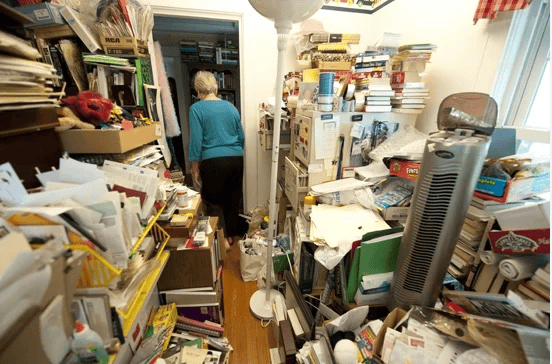
Many property owners underestimate how quickly hoarding conditions can affect neighboring occupants and surrounding structures.
Common Liability Risks Include:
- blocked emergency exits,
- fire-code violations,
- indoor air quality complaints,
- pest migration,
- bacterial contamination,
- mold spread,
- falling hazards,
- and unsafe living conditions.
In multi-unit properties, these problems rarely stay isolated to one apartment.
Contamination may spread through:
- shared HVAC systems,
- plumbing penetrations,
- wall cavities,
- ceiling systems,
- and pest pathways.
This can create:
- neighboring tenant complaints,
- occupancy disputes,
- municipal violations,
- and potential legal exposure.
The Hidden Financial Cost of Delayed Remediation
The cost of remediation often increases dramatically when action is postponed.
Delayed Response May Lead To:
24–48 Hours
- increased microbial activity,
- worsening odors,
- early contamination spread.
Several Days
- deeper material penetration,
- mold amplification,
- expanded pest activity,
- growing structural deterioration.
Weeks or Longer
- major reconstruction needs,
- larger liability exposure,
- prolonged vacancy periods,
- insurance complications,
- and declining property value.
For landlords and property managers, prolonged vacancy alone can create major operational losses.
Multi-Unit Buildings Face Elevated Risk

Apartment buildings, condominiums, senior housing facilities, and mixed-use properties face unique challenges when hoarding conditions develop.
Why Multi-Unit Properties Are More Vulnerable
Contamination can migrate through:
- ventilation systems,
- shared plumbing lines,
- wall penetrations,
- flooring systems,
- and common areas.
This may expose:
- neighboring tenants,
- maintenance personnel,
- contractors,
- and visitors.
Additional Risks in Multi-Unit Properties
- odor migration complaints,
- increased pest infestations,
- tenant turnover,
- legal disputes,
- failed inspections,
- code enforcement actions,
- and habitability concerns.
Property management associations and housing professionals across New York increasingly recognize hoarding remediation as both:
- a public health issue,
and - a risk-management priority.
Also Read ☣️When One Apartment Puts the Whole Building at Risk
Real-World Scenario
A landlord in Rockland County initiates eviction proceedings after neighboring tenants complain of strong odors and pest activity inside a multi-unit property.
After access is gained, remediation teams discover:
- severe clutter accumulation,
- rodent contamination,
- hidden plumbing leaks,
- urine-saturated flooring,
- and mold growth behind walls.
The contamination has already spread into adjacent units through shared HVAC systems and wall cavities.
Because professional remediation documentation begins immediately, the property owner is able to:
- support insurance discussions,
- reduce liability exposure,
- coordinate inspections,
- and restore occupancy faster than would have been possible with unregulated cleanup efforts.

Why Liability Awareness Is Increasing
Several trends are increasing pressure on property owners:
- stricter habitability expectations,
- increased indoor air quality awareness,
- aging housing stock,
- rising insurance costs,
- stronger code enforcement,
- and growing public-health concerns.
At the same time, buyers, tenants, insurers, and municipalities are becoming less tolerant of:
- unresolved contamination,
- odor problems,
- pest activity,
- and unsafe living conditions.
Professional remediation is increasingly viewed as:
“asset protection, risk mitigation, and environmental recovery — not merely cleanup.”
Also read ☣️Why Does Hoarding Create Extreme Disease Risk Inside Homes?
Conclusion

Hoarding conditions can create far-reaching financial, legal, environmental, and operational consequences for property owners throughout New York.
What begins as clutter may eventually involve:
- biohazard contamination,
- structural deterioration,
- pest infestation,
- code violations,
- insurance complications,
- and serious liability exposure.
Professional remediation helps property owners:
- document contamination properly,
- reduce risk,
- support inspections,
- restore safe occupancy,
- and protect long-term property value.
The sooner remediation begins, the greater the opportunity to limit damage, reduce costs, and preserve the future usability of the property.
FAQs
1. Can hoarding conditions affect homeowners insurance?
Yes. Severe hoarding conditions may complicate claims involving mold, water damage, fire hazards, pest infestations, and structural deterioration.
2. Does insurance cover hoarding cleanup?
Coverage varies depending on policy language, the cause of damage, and whether the condition is considered sudden or long-term.
3. Can landlords face liability from hoarding situations?
Yes. Landlords may face liability involving habitability concerns, fire-code violations, indoor air quality complaints, pest migration, and unsafe living conditions.
4. Why is professional documentation important during remediation?
Documentation helps support insurance discussions, inspections, legal protection, property transactions, and contamination tracking.
5. Can hoarding contamination spread to neighboring apartments?
Yes. Odors, pests, mold spores, and airborne contaminants may spread through HVAC systems, shared walls, and plumbing penetrations.
6. Are hoarding properties considered biohazard environments?
Many advanced hoarding environments contain biological contamination requiring professional remediation protocols.
7. Why do delayed cleanup efforts increase costs?
Contamination spreads over time, increasing structural damage, mold growth, pest activity, and reconstruction requirements.
8. Can hoarding conditions violate New York housing codes?
Yes. Severe hoarding may create fire hazards, blocked exits, unsanitary conditions, and occupancy violations.
9. How does professional remediation help property owners?
Professional remediation reduces liability, supports documentation, restores safer conditions, and helps protect long-term property value.
10. Why are multi-unit buildings especially vulnerable?
Shared ventilation systems, wall cavities, plumbing lines, and common areas allow contamination and odors to spread more easily.