

Why Odors Return After Trauma Cleanup—and How 2026 Remediation Practices Prevent It
Odors return after trauma or death cleanup when hidden VOC reservoirs, structural absorption, or air system contamination are not fully addressed. Modern 2026 remediation practices prevent recurrence by combining source removal, material science analysis, advanced air chemistry, HVAC isolation, and post-remediation verification rather than relying on single-step deodorization.
When “Smells Gone” Isn’t Actually Gone
One of the most common—and frustrating—experiences after trauma or death cleanup is this:
“It was fine for weeks… and then the smell came back.”
This isn’t failure. It’s chemistry, physics, and building science asserting themselves after incomplete remediation.
As of 2026, the industry has moved beyond surface-level odor control. True professionals now treat odor recurrence as a predictable system behavior, not a mystery.
The Real Reason Odors Return: Secondary VOC Reservoirs
Odor Is Stored, Not Just Released
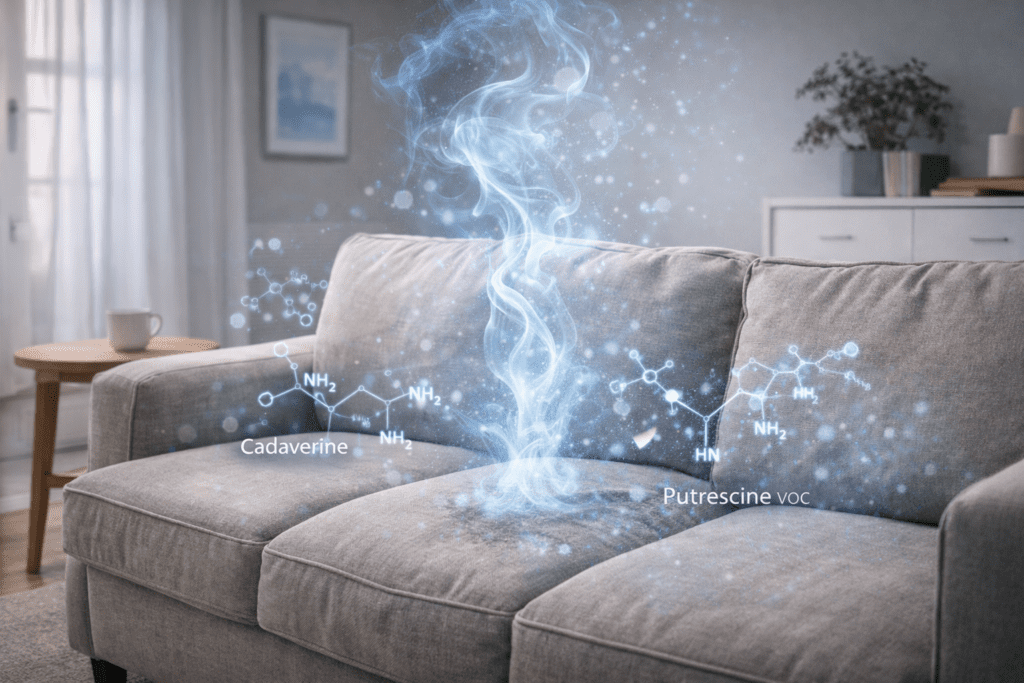
When decomposition occurs, odor-causing VOCs don’t stay politely in the air. They migrate and embed into:
- Subflooring and joists
- Drywall paper backing
- Insulation and vapor barriers
- HVAC duct lining and coils
- Furniture frames and composite materials
These materials act as chemical sponges. Even after cleaning, they continue off-gassing—sometimes triggered by heat, humidity, or air movement weeks later.
Also Read ☣️The Science of Odor Neutralization After Trauma or Death
Why Legacy Cleanup Models Fail Long-Term
Traditional remediation often stops at:
- Visible source removal
- Basic cleaning and deodorizing
- Short-term air treatment
What it misses:
- Vapor migration pathways
- Porous material chemistry
- Pressure-driven airflow behavior
- HVAC recirculation loops
By 2026 standards, this is no longer considered complete remediation.
The 2026 Remediation Shift: From Cleanup to Environmental Control
1. Material Science–Driven Demolition Decisions
Modern remediation evaluates how deeply VOCs have bonded, not just whether a surface “looks clean.”
Professionals now assess:
- Adsorption vs absorption depth
- Composite material saturation thresholds
- Time-based off-gassing curves
This prevents the common mistake of leaving odor-loaded materials in place.
2. Zonal Air Management (Not Whole-Building Guesswork)
2026 practices rely on zoned containment, not blanket treatment.
This includes:
- Negative pressure mapping
- Controlled air pathways
- Compartmentalized remediation zones
Odor is treated where it lives—not where it wanders.
3. Advanced Hydroxyl & Oxidation Blending
Instead of relying on a single technology, modern remediation stacks:
- Hydroxyl radical generation for continuous neutralization
- Targeted vapor-phase chemistry for deep penetration
- Controlled oxidation cycles matched to material sensitivity
This layered approach prevents rebound odors caused by partial molecular breakdown.
4. HVAC Isolation and Remediation as Standard Practice
By 2026, HVAC systems are no longer optional considerations.
Best practices include:
- Temporary system isolation
- Duct and coil evaluation
- Targeted internal neutralization
- Filter and liner replacement when necessary
If air moves, odor moves. Modern remediation treats HVAC as a primary vector.
5. Post-Remediation Verification (PRV) Becomes the Norm
Professional firms now verify outcomes rather than rely on human smell alone.
Verification methods include:
- Extended dwell observation periods
- Targeted re-entry testing
- VOC trend monitoring (when applicable)
- Pressure and airflow validation
This step separates professional remediation from cosmetic cleanup.
Also Read ☣️What Families and Property Managers Need to Know About Unattended Death Cleanup
Why Odor “Comes Back” After DIY or Budget Cleanup
In nearly all recurring cases, the cause is one of the following:
- Structural absorption underestimated
- Vapor pathways ignored
- HVAC contamination untreated
- Air chemistry applied without source removal
- Insufficient treatment duration
Odor didn’t return—it was never fully resolved.
Absolute Bioremediation’s 2026-Ready Approach
Absolute Bioremediation operates under a future-proof remediation model, integrating:
- Chemical odor neutralization
- Building science diagnostics
- Airflow engineering
- Material-specific treatment protocols
- Verification-based clearance
The result is not “smells better today,” but chemically stable, long-term resolution.
Conclusion: Permanent Odor Control Is Predictable—If You Respect the Science
Recurring odor isn’t mysterious. It’s the result of:
- Complex chemistry
- Porous materials
- Air movement
- Time
By 2026 standards, professionals don’t chase smells—they eliminate the systems that allow them to exist.
That’s the difference between cleanup and true environmental remediation.
People Also Ask
1. Why does odor return weeks after trauma cleanup?
Because absorbed VOCs continue off-gassing from untreated materials.
2. Can temperature changes cause odor to come back?
Yes. Heat and humidity accelerate VOC release from porous materials.
3. Is demolition always required to stop odor?
Not always, but material evaluation determines when removal is necessary.
4. How does HVAC contribute to odor recurrence?
Ductwork and airflow redistribute trapped odor compounds.
5. Are 2026 remediation methods different from older practices?
Yes. They focus on systems, verification, and long-term stability.
6. Can air treatment alone permanently remove odors?
No. Source removal and material treatment are essential.
7. How long should odor remediation last?
As long as required to neutralize active off-gassing—not a preset timeframe.
8. What is post-remediation verification?
A confirmation process ensuring odor elimination is stable over time.
9. Do professional companies guarantee odor removal?
Reputable firms base outcomes on process completeness, not masking.
10. What makes Absolute Bioremediation’s approach different?
A science-based, future-ready remediation model designed to prevent recurrence.