
Why Isn’t Biohazard Remediation Just “Cleaning”? What’s the Difference?
Biohazard remediation is not ordinary cleaning because it targets pathogenic risk, not visible dirt. While cleaning removes debris, remediation uses scientifically validated processes—sanitation, disinfection, sterilization, and decontamination—to interrupt disease transmission, neutralize biological hazards, and meet regulatory health standards. These processes require specialized chemistry, dwell times, PPE, and verification protocols that go far beyond household or janitorial cleaning.
When “Clean” Is a Dangerous Word
In everyday language, clean sounds reassuring. Floors look shiny. Odors disappear. Surfaces feel dry. But in the world of biohazards—bloodborne pathogens, infectious waste, trauma scenes, sewage backups—looking clean can be profoundly misleading.
Biohazard remediation exists because microorganisms do not care about appearances. They care about moisture, nutrients, surface structure, and time. And they exploit misunderstandings between sanitation, sterilization, and decontamination with microscopic enthusiasm.
This article dismantles the myth that biohazard remediation is “just cleaning” and explains the science of microbial control, the chemistry behind professional agents, and why misuse of disinfectants can increase—not reduce—risk.
What Is Biohazard Remediation, Scientifically Speaking?
Biohazard remediation is a risk-reduction discipline, not a cosmetic service. Its goal is to:
- Interrupt disease transmission pathways
- Neutralize infectious agents (bacteria, viruses, fungi, spores)
- Remove or stabilize biological material at a molecular level
- Restore environments to health-based, not aesthetic, standards
This work is governed by OSHA, EPA, CDC, and industry-specific regulations because failure doesn’t mean “still dirty”—it means ongoing exposure.
Also Read 👉🏼What Is the Full Life-Cycle of a Professional Biohazard Cleanup?
The Four Levels of Microbial Control (And Why Words Matter)
1. Cleaning: Physical Removal Only
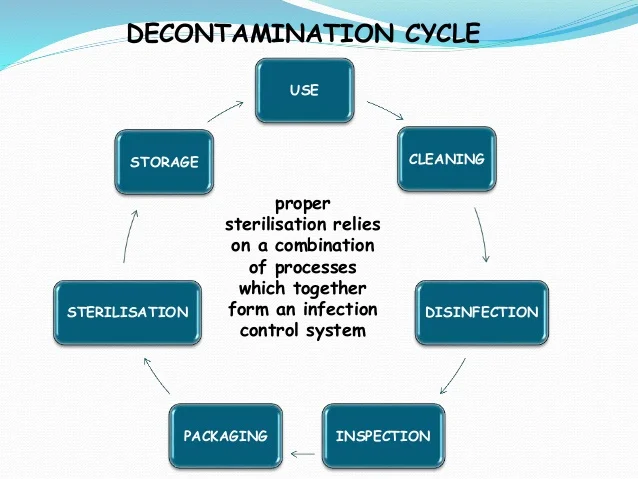
Cleaning is the first step, not the solution.
- Uses detergents or surfactants
- Removes visible soil and organic matter
- Does not reliably kill microorganisms
Cleaning reduces microbial load indirectly by washing organisms away—but many pathogens remain viable, especially when protected by biofilms or porous surfaces.
Cleaning prepares a surface for disinfection; it does not complete remediation.
2. Sanitation: Risk Reduction, Not Elimination
Sanitation lowers microbial counts to levels deemed safe by public health standards.
- Common in food service and hospitality
- Reduces—but does not eliminate—pathogens
- Targets general populations, not high-risk environments
Sanitizers are insufficient for bloodborne pathogens, trauma scenes, or medical waste because “acceptable risk” in these environments is near zero.
3. Disinfection: Killing Pathogens, Selectively
Disinfection uses chemical agents to destroy many—but not all—microorganisms.
- Effective against bacteria and viruses
- Often ineffective against spores, protozoa, or biofilm-embedded organisms
- Requires precise dwell time, concentration, and surface compatibility
A surface wiped too quickly or diluted improperly may look disinfected while remaining biologically active.
4. Sterilization: Total Microbial Destruction
Sterilization eliminates all forms of life, including spores.
- Uses extreme methods (heat, vaporized chemicals, radiation)
- Typically reserved for medical instruments and labs
- Not practical or safe for most built environments
This is why decontamination, not sterilization, is the professional standard for biohazard remediation.
Decontamination: The Gold Standard of Remediation

Decontamination combines:
- Physical removal
- Chemical neutralization
- Biological breakdown
- Verification testing
Its objective is not theoretical sterility but functional safety—a space that no longer poses biological risk to occupants or workers.
Also Read 👉🏼The Hidden Biohazards in Hoarding Environments | Pathogens, VOCs & Structural Risks Explained
The Science Behind Disinfectants: More Than “Kills Germs”
How Disinfectants Actually Work
Disinfectants act by damaging critical microbial structures:
- Cell membranes (quats, alcohols)
- Proteins and enzymes (phenolics, oxidizers)
- Genetic material (chlorine, chlorine dioxide)
However, efficacy depends on:
- Organic load present
- Surface type (porous vs non-porous)
- Contact time
- Environmental conditions (pH, temperature)
Using the wrong disinfectant—or using it incorrectly—can leave pathogens intact or create resistant survivors.
Sporicides: Why Spores Change Everything
Bacterial spores (e.g., Clostridioides difficile, Bacillus anthracis) are microbial survival capsules.
- Resistant to heat, drying, and many disinfectants
- Can persist for years on surfaces
- Require sporicidal chemistry to neutralize
Chlorine dioxide and hydrogen peroxide-based systems are commonly used because they disrupt spore coats at a molecular level—something standard disinfectants cannot achieve.
Enzyme Cleaners: Biology Fighting Biology
Enzyme cleaners do not “kill” pathogens directly. Instead, they:
- Break down proteins, fats, and carbohydrates
- Destroy biofilms that protect microbes
- Remove nutrient sources that allow regrowth
In biohazard remediation, enzymes are often used before or alongside disinfectants to expose hidden microbial reservoirs.
Think of enzymes as dismantling the fortress, and disinfectants as neutralizing the enemy.
Why DIY Disinfection Often Fails
Common mistakes include:
- Applying disinfectants to dirty surfaces
- Ignoring dwell times
- Mixing incompatible chemicals
- Using consumer-grade products for industrial risks
These errors don’t just reduce effectiveness—they can aerosolize pathogens, spread contamination, or create toxic byproducts.
Biohazard remediation protocols exist because chemistry is unforgiving.
Verification: The Step Most People Skip
Professional remediation includes:
- ATP testing
- Microbial sampling
- Visual and odor assessments
- Documentation for liability and compliance
If results aren’t measured, safety is assumed—and assumptions are where outbreaks begin.
Conclusion: Words Shape Safety
Calling biohazard remediation “cleaning” is not just inaccurate—it’s dangerous. Each level of microbial control exists for a reason, and skipping steps collapses the entire safety system.
True remediation respects biology, chemistry, and physics equally. It recognizes that microorganisms are ancient, adaptable, and indifferent to human convenience.
Clean is a look.
Remediated is a state.
And only one of those protects human health.
FAQs: Biohazard Remediation vs Cleaning
-
What is the main difference between biohazard remediation and regular cleaning?
Biohazard remediation focuses on eliminating biological health risks using regulated processes, while regular cleaning only removes visible dirt and debris. -
Why isn’t disinfecting enough for biohazard cleanup?
Disinfection does not reliably destroy spores, biofilms, or all pathogens, which can continue to pose health risks after treatment. -
What types of environments require biohazard remediation?
Trauma scenes, sewage backups, infectious disease exposures, hoarding environments, and medical or industrial biohazard incidents require remediation. -
How do enzyme cleaners help in biohazard remediation?
Enzyme cleaners break down organic material and biofilms, removing nutrient sources that allow pathogens to survive and multiply. -
What are sporicidal disinfectants used for?
Sporicidal disinfectants are designed to neutralize bacterial spores that resist standard disinfectants and persist on surfaces for long periods. -
Is biohazard remediation regulated by law?
Yes. OSHA, EPA, CDC, and state health agencies regulate biohazard remediation to protect workers and occupants from exposure. -
Can biohazard contamination spread if cleaned incorrectly?
Yes. Improper cleaning can aerosolize pathogens, spread contamination, or leave active biological material behind. -
Why is dwell time important when using disinfectants?
Disinfectants must remain on surfaces for a specific period to effectively disrupt microbial structures and neutralize pathogens. -
Does biohazard remediation guarantee sterilization?
No. The goal is decontamination—reducing biological risk to safe levels—not complete sterilization, which is impractical in most environments. -
How is successful biohazard remediation verified?
Verification is done through visual inspection, testing methods such as ATP or microbial sampling, and documented compliance procedures.