

Levels of Hoarding: A Comprehensive Guide to Assessing Risk, Biohazard Severity, and Required Remediation Strategy
Hoarding is not a single condition — it exists on a spectrum of severity, each level presenting its own set of risks, contaminants, and remediation requirements. Understanding these levels is essential for families, property owners, managers, and professionals in New York who must determine the safest and most effective course of action.
Unlike general cleaning or junk removal, hoarding remediation requires the expertise of trained professionals who understand biohazards, structural risks, microbial contamination, pest activity, environmental conditions, and New York compliance standards. Each level of hoarding brings progressively greater danger — not just to occupants, but to neighboring apartments and the structural integrity of the building.
This guide breaks down the five recognized levels of hoarding, the hazards associated with each, and the remediation strategies Absolute Biohazard Remediation applies as one of New York’s leading biohazard firms.
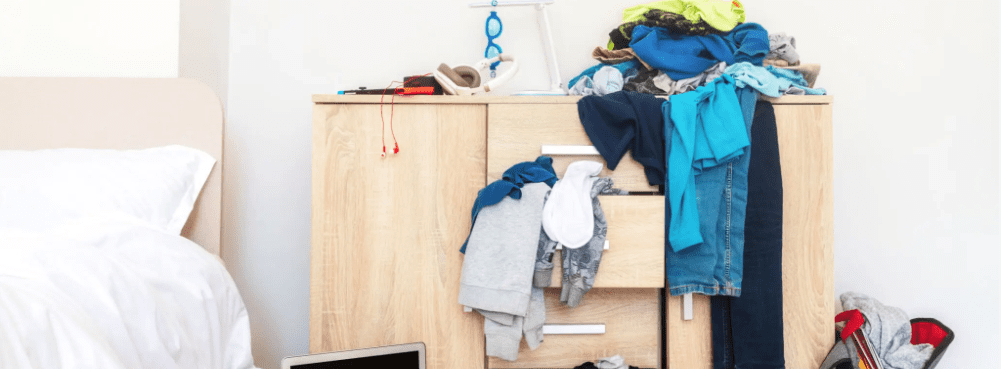 Level 1 Hoarding — Early-Stage Clutter with Limited Biohazard Exposure
Level 1 hoarding is characterized by:
- mild clutter with accessible pathways
- minimal dust, debris, or waste
- few or no odors
- no visible mold or pests
- generally safe structural conditions
Risks at Level 1
Although low-risk, Level 1 properties may still contain:
- mild sanitation issues
- minor tripping hazards
- early insect activity
Remediation Strategy
A Level 1 remediation typically involves organized sorting, cleaning, and reorganization.
No specialized biohazard intervention is usually needed, but professional oversight ensures early issues don’t escalate.
Level 2 Hoarding — Blocked Entrances, Increased Clutter, and Emerging Environmental Concerns
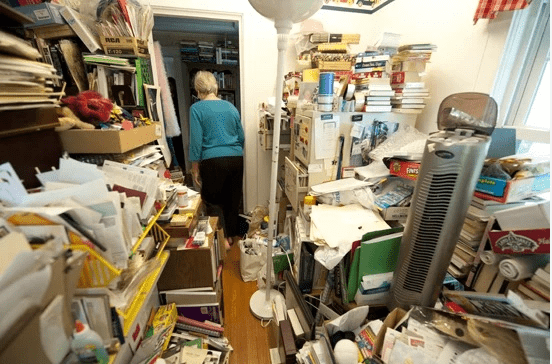 Level 2 presents more serious concerns:
- blocked or partially obstructed pathways
- light mold growth (bathrooms or kitchens)
- expired food accumulation
- mild odors
- early signs of pests (flies, ants)
- limited ventilation issues
Risks at Level 2
Environmental concerns begin to develop:
- microbial bacterial growth
- heightened humidity and mold spores
- increased fire load
Remediation Strategy
Level 2 requires professional cleaning and disinfection, mold control, removal of expired or rotting food, and re-establishment of ventilation.
Technicians may begin to encounter limited biohazards depending on sanitation levels.
Level 3 Hoarding — Visible Biohazards, Pests, and Structural Stress
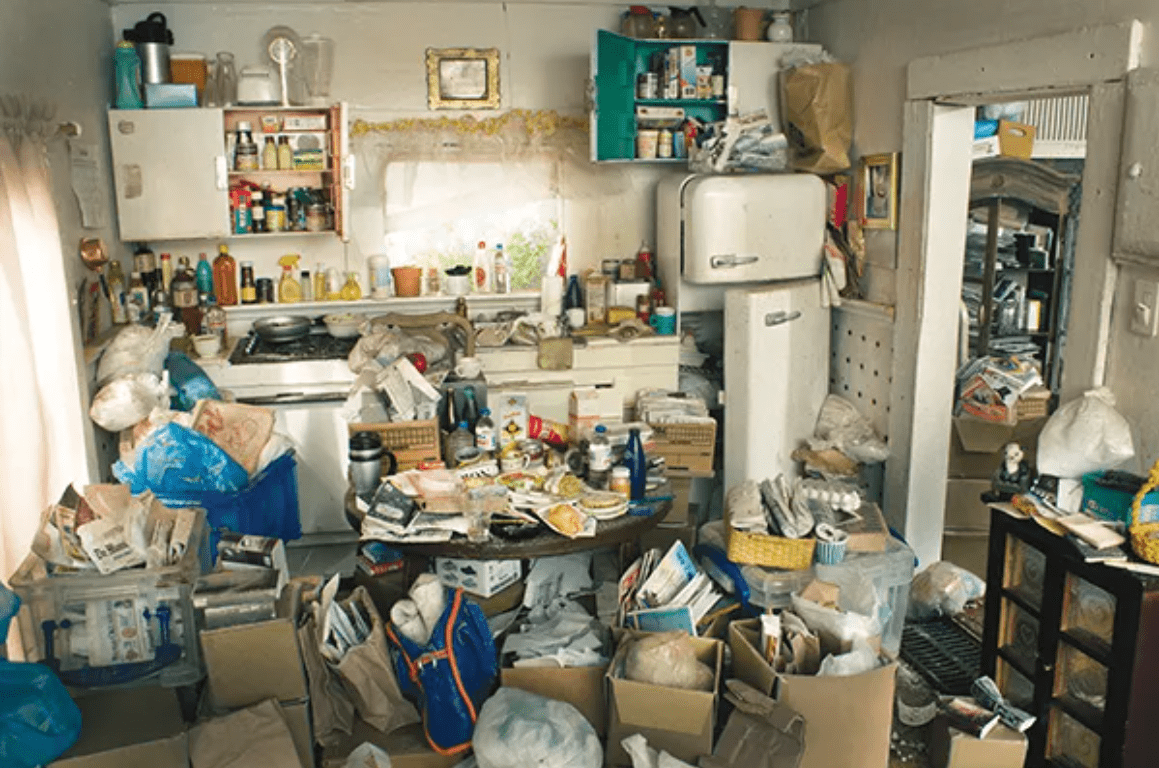
Level 3 marks the transition into true biohazard remediation territory. Indicators include:
- strong, persistent odors
- moderate mold growth
- visible structural damage
- piles of debris in living areas
- inaccessible rooms

- biohazard waste disposal
- long-term food waste
- active pest infestations (cockroaches, mice)
- urine or fecal contamination (animal or human)
Risks at Level 3
Biohazard severity increases:
- airborne contaminants (ammonia, VOCs)
- bacterial amplification
- contaminated textiles and furniture
- structural instability due to moisture or weight
- fire hazards from blocked exits
Remediation Strategy
Level 3 cleanup must be managed by trained professionals using:
- PPE and respiratory protection
- HEPA filtration
- containment controls
- mold remediation
- pest remediation
- removal of contaminated building materials if necessary
This level cannot be handled safely by untrained individuals.
Level 4 Hoarding — Severe Biohazard Conditions, Structural Risk, and Widespread Contamination
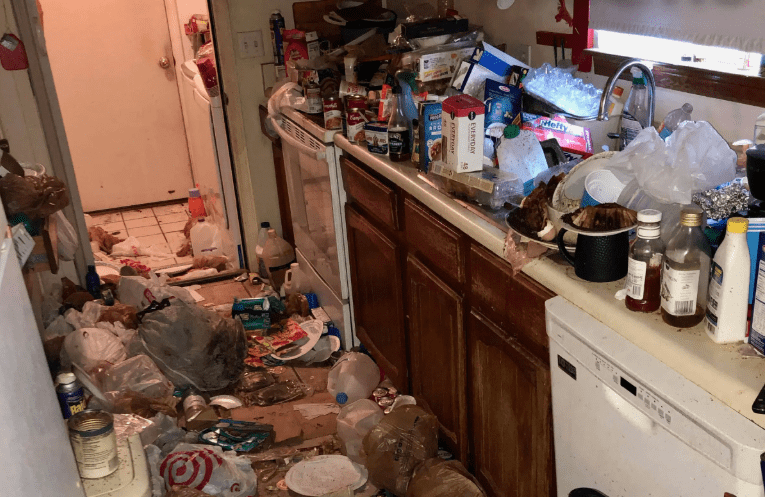
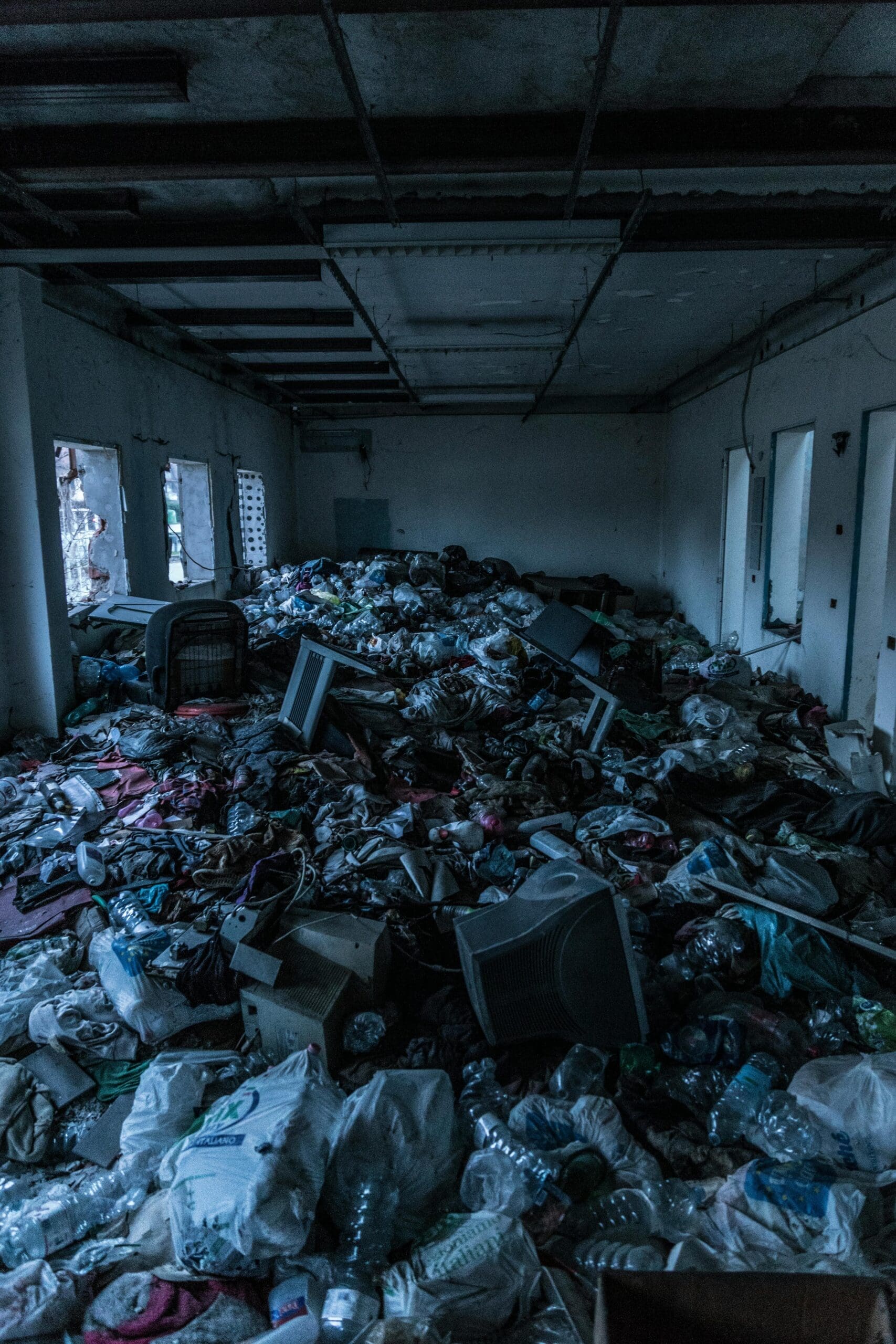
Level 4 presents high-risk biohazard environments, commonly involving:
- decaying food or organic material
- heavy pest infestation (rodents, fleas)
- visible human or animal waste
- widespread mold colonization
- damaged floors, walls, or ceilings
- overwhelming odors from VOC accumulation
- possible decomposition of animals or concealed biological hazards
 overwhelming odors from VOC accumulation
Risks at Level 4
These environments contain:
- zoonotic disease risks (hantavirus, leptospirosis)
- airborne mold spores
- structural collapse risks
- high ammonia levels
- significant fire load
- spread of hazards to neighboring units
Remediation Strategy
Level 4 requires a full-scale biohazard remediation team, including:
- complete removal of hoarded material
- deep decontamination
- pest eradication
- mold remediation
- structural assessment
- odor neutralization (hydroxyl, vapor-phase)
This level must be handled under strict safety standards to protect workers and occupants.
Level 5 Hoarding — Extreme, Life-Threatening Conditions Requiring Full Biohazard Remediation
Level 5 is the most severe stage and involves:
- no functional plumbing or sanitation
- non-operational kitchens or bathrooms
- animal hoarding or deceased animals
- human waste accumulation
- advanced decomposition of organic matter
- vermin activity at dangerous levels
- severe structural deterioration
- dangerously high VOC/ammonia concentrations
- complete obstruction of living spaces
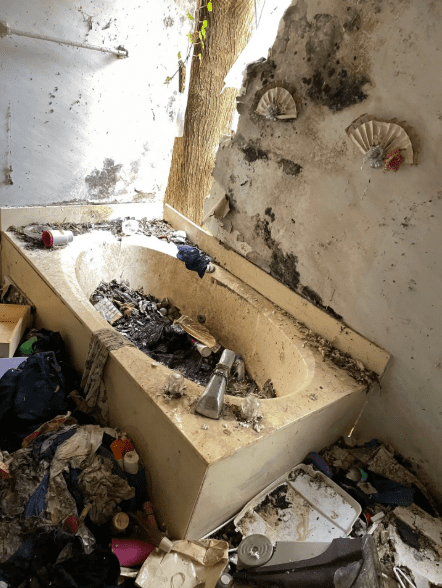 animal hoarding or deceased animals
Risks at Level 5
This environment poses serious health and structural risks, including:
- airborne pathogens
- toxic mold levels
- compromised structural integrity
- fire and collapse hazards
- severe pest infestations
- biological contamination affecting the entire building
Remediation Strategy
Level 5 requires the highest level of professional intervention, including:
- full PPE with respiratory protection
- extensive containment
- complete source removal
- demolition of contaminated structural materials
- deep sanitation and deodorization
- regulated medical waste disposal
- post-remediation verification testing
This is the type of environment where Absolute Biohazard Remediation demonstrates its full expertise in restoring safety and habitability.
Conclusion
Understanding the five levels of hoarding is essential for determining the true risk, the severity of contamination, and the professional strategy needed to restore the property safely. Hoarding is not purely a cleanliness issue — it is often a biohazard emergency requiring scientific evaluation, specialized training, and strict adherence to New York State regulations.
Absolute Biohazard Remediation brings over 15 years of expert-level experience to hoarding remediation, using advanced techniques and certified methods to address environments at every level.
When safety, health, and structural integrity matter, ABR is the company New York relies on to get the job done right.
10 FAQs
1. What are the five recognized levels of hoarding?
They range from Level 1 (mild clutter) to Level 5 (extreme biohazard conditions involving structural damage, pests, waste accumulation, and toxic environments). Each level requires progressively more specialized remediation.
2. When does hoarding become a biohazard?
 2. When does hoarding become a biohazard?
Biohazards typically appear at Level 3 and above, when sanitation issues, decomposition, mold, pests, or waste contamination occur.
3. How can I tell if a hoarded home requires professional help?
Professional remediation is necessary if you notice: strong odors, mold, pests, blocked pathways, structural damage, or any type of waste or decomposition.
4. Why do biohazards increase at higher levels of hoarding?
Clutter traps moisture, blocks airflow, hides spills or waste, and creates prime conditions for bacterial and fungal growth, pest infestation, and decomposition.
5. Is hoarding cleanup regulated in New York?
Yes. When biohazards are present, cleanup must follow NYSDOH rules, OSHA standards, EPA guidelines, and DOT waste transport regulations.
6. What risks do Level 4 and 5 hoarding environments pose?
They present contamination risks (bacterial, fungal, zoonotic), VOC toxicity, structural collapse, fire hazards, and environmental hazards that can affect neighboring units.
7. Can untrained individuals safely clean Levels 3–5?
No. These levels require trained biohazard professionals using PPE, containment, HEPA filtration, and regulated waste disposal procedures.
8. What cleanup methods are used in severe hoarding cases?
Methods include sorting, debris removal, mold remediation, pest control, disinfection, structural repair, odor neutralization, and verification testing.
9. How does Absolute Biohazard Remediation assess hoarding severity?
ABR evaluates biohazards, air quality, structural stability, pest activity, odor levels, and environmental conditions to create a tailored remediation plan.
10. Why should I choose Absolute Biohazard Remediation?
Because ABR combines scientific expertise, strict compliance, advanced technology, and 15+ years of experience, restoring even the most severe hoarded environments safely and thoroughly.
- Biohazard Cleanups
- Blood & Body Fluid
- Crime Scenes
- Mold & Odor
- Radon Mitigation
- Suicides & Unattended Deaths
We Are Here When You Need Us!
SEND AN IMMEDIATE & CONFIDENTIAL MESSAGE