
The Biology of Biohazards: Understanding Pathogens, Decay, and the Invisible Dangers at a Scene
Biohazard cleanup is one of the most technically demanding and scientifically complex fields within the restoration and decontamination industry. Behind every incident—whether a trauma, suicide, unattended death, industrial accident, crime scene, or severe medical event—there is a biological landscape governed by pathogens, microbial proliferation, decomposition chemistry, and environmental vectors that influence how contamination spreads.
While many companies present biohazard remediation as a form of “specialized cleaning,” the reality is far more intricate. Effective remediation requires advanced knowledge of microbiology, pathology, environmental science, fluid dynamics, odor chemistry, and strict adherence to State regulations governing biohazardous waste, transportation, and disposal.
Absolute Biohazard Remediation has spent over 15 years serving the New York region and is continuously operating at the highest professional and scientific standards. This article explains—fully, clearly, and without shortcuts—the biology behind biohazards and why professional remediation is the only responsible response in any situation involving human biological contamination.
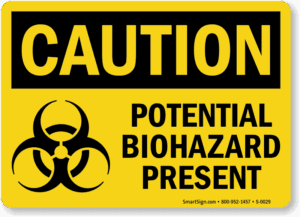 Understanding What Constitutes a Biohazard
At its core, a biohazard is any biological substance that poses a threat to human health. These hazards originate from blood, bodily fluids, tissues, decomposition byproducts, and microbial agents capable of transmitting disease or triggering environmental contamination.
According to New York State Department of Health (NYSDOH) and New York Codes, Rules and Regulations (NYCRR), biohazardous materials fall under the category of regulated medical waste or infectious waste when they contain bloodborne pathogens or potentially infectious agents. Remediation professionals must comply with:
- NYCRR Title 10, Part 70 (Regulated Medical Waste)
- OSHA 29 CFR 1910.1030 (Bloodborne Pathogens Standard)
- DOT Hazardous Materials Regulations 49 CFR Parts 171–180 (transport of biohazard waste)
Failure to follow these guidelines can result in contamination, exposure incidents, legal consequences, or long-term structural damage to property.
 The Microbiology of Biohazards
 The Microbiology of Biohazards
Biohazard scenes contain a complex mixture of pathogens and opportunistic organisms. Biohazard remediation technicians must understand not only what pathogens are present but also how they behave in different environments.
Bloodborne Pathogens
These include viruses, bacteria, and parasites capable of causing severe disease. Common examples present at trauma or death scenes include:
- Hepatitis B (HBV)
- Hepatitis C (HCV)
- HIV
- MRSA (Methicillin-Resistant Staphylococcus aureus)
- Clostridium difficile
- Streptococcus and Staphylococcus species
- Syphilis (Treponema pallidum)
- Human T-cell lymphotropic virus (HTLV)
Most are not visible to the naked eye and are easily aerosolized during disturbance of contaminated materials.
Studies show, for example:
- HBV can survive 7+ days on environmental surfaces
- HCV can remain viable in dried blood for up to 6 weeks
- MRSA can persist on porous material for months
This resilience is why improper or household-level cleaning is insufficient.
Airborne Microorganisms and Aerosolization
Bodily fluids disturbed during cleaning—wiping, scrubbing, vacuuming, or even removing carpets or flooring—can lead to aerosolized contamination, where microscopic droplets containing pathogens disperse into the air.
This is particularly dangerous in enclosed environments such as apartments, stairwells, elevators, or older New York multifamily buildings where ventilation systems interconnect.
Microbial Bloom After Death
After death, bacteria within the body translocate and multiply rapidly. This process—called microbial bloom—breaks down tissue, producing fluids, gases, and volatile organic compounds (VOCs). These catalyze decomposition and significantly increase contamination risks.
The Science of Human Decomposition
Decomposition is a biochemical process driven by microbial activity, temperature, humidity, oxygen availability, insects, and the breakdown of cells through autolysis.
Every stage of decomposition has unique hazards.
Stage 1 – Autolysis (Self-Digestion)
 Stage 1 – Autolysis (Self-Digestion)
Immediately after death, cells break down, membranes rupture, and intracellular enzymes leak into surrounding tissues. These fluids begin to seep outward and can contaminate flooring and subflooring within hours.
Stage 2 – Putrefaction (Bacterial Break-Down)
Anaerobic bacteria flourish, producing:
- Ammonia
- Sulfur compounds
- Cadaverine
- Putrescine
- Indole and skatole
- Methane and hydrogen sulfide
These compounds create the powerful decomposition odor recognizable at death scenes. More importantly, they penetrate deep into porous materials such as:
- hardwood
- laminate
- particle board
- drywall
- plaster
- textiles
- HVAC ducting
- grout and tile sublayers
If not professionally removed, these odors can persist indefinitely.
Stage 3 – Active Decay and Fluid Purge
The body releases purge fluid, a mixture of blood, cellular liquid, digestive enzymes, and bacteria. This fluid is extremely penetrative and can travel:
- under flooring
- behind wall voids
- down structural beams
- through ceiling materials
- into insulation
This is why the floor seen at a trauma or unattended death is often only a visible indicator—the true contamination lies below.
Also Read 👉🏼What Families and Property Managers Need to Know About Unattended Death Cleanup
Environmental Contamination and Spread Patterns
Biohazard contamination rarely stays confined to a visible area. Properties in New York, especially older buildings, have structural quirks that increase spread risk.
Fluid Dynamics in Real Scenes
Biological fluids follow gravity, but also:
- wick into porous materials
- spread laterally along flooring underlayment
- enter cracks, seams, and joints
- penetrate carpet padding
- seep into wall cavities
Technicians must understand capillary action, fluid diffusion, and substrate absorption behaviors to locate contamination effectively.
Odor and VOC Migration
Volatile organic compounds do not remain stationary. They move through:
- ventilation systems
- shared ductwork
- porous building materials
- microcracks in plaster walls
Without full remediation, neighbors in adjacent apartments may smell decomposition for months.
Because New York housing often shares ventilation across units, odor control becomes a public-health necessity—not just a cosmetic concern.
Regulatory Requirements for Biohazard Remediation in New York
 Regulatory Requirements for Biohazard Remediation in New York
Absolute Biohazard Remediation adheres to all New York State, OSHA, and federal requirements, including:
- New York State Department of Environmental Conservation (NYSDEC) guidelines for regulated medical waste
- NYCRR Title 15 Part 360 for waste management
- DOT 49 CFR for biohazard transportation
- OSHA 1910.1030 for worker protection
- EPA guidelines on disinfectant use and efficacy
Every step—from PPE usage to waste manifest tracking—is performed under strict procedural control.
New York imposes especially severe penalties for improper handling or disposal of infectious waste. This is precisely why professional remediation is not optional; it is legally and ethically required.
Why Professional Biohazard Remediation Is the Only Safe Response
Given the biological complexity, legal responsibilities, and risk to occupants, there is no circumstance where an untrained individual should attempt cleanup. Professional remediation ensures:
- contamination is identified at the microbial level
- all affected materials are removed—not just cleaned
- ATP and verification testing confirm complete decontamination
- odors and VOCs are neutralized, not masked
- waste is handled in full compliance with NY State and federal law
- the property is restored to a condition safe for re-occupancy
Absolute Biohazard Remediation uses scientific methods, industry-leading technology, and deep biological knowledge to guarantee safety.
Conclusion
The biology of biohazards is complex, unforgiving, and governed by invisible forces—pathogens, decomposition chemistry, microbial spread, VOC migration, and structural penetration. These are not issues that can be solved with surface cleaning, consumer disinfectants, or untrained labor. They require scientific precision, regulatory compliance, and professional expertise rooted in years of experience.
Absolute Biohazard Remediation has spent over 15 years serving the greater New York area, mastering the science and the procedures behind safe, compliant, and thorough decontamination. When you want the job done correctly, discreetly, and with uncompromising safety, only the professionals at Absolute Biohazard Remediation have the knowledge, credentials, and proven experience to restore a property to a truly safe condition.
When health, safety, and liability are on the line, trust the experts who understand every layer of the biology behind the scene.
Absolute Biohazard Remediation is the name New York relies on.
FAQ
1. What exactly is considered a “biohazard” at a trauma or death scene?
A biohazard is any biological material that poses a risk of infection or illness to humans. At trauma, crime, suicide, or unattended death scenes, this typically includes:
- Blood
- Bodily fluids (including purge fluids)
- Human tissue
- Contaminated sharps (needles, glass, metal)
- Decomposition byproducts (fluids and gases)
- Materials saturated with any of the above
These substances may contain bloodborne pathogens such as hepatitis B and C, HIV, and other infectious agents that can survive on surfaces for days to weeks. Under New York State regulations, much of this material is treated as regulated medical waste or infectious waste, which means it must be handled, packaged, transported, and disposed of according to strict laws—not treated like regular trash or household waste.
2. Why is biohazard cleanup different from regular cleaning or janitorial work?
Regular cleaning and janitorial tasks focus on appearance and basic sanitation. Biohazard remediation focuses on infection control, decontamination, and risk elimination.
Key differences include:
- Pathogen Awareness
Technicians must understand how viruses, bacteria, and other microorganisms behave in real environments, including survival times and spread patterns. - Depth of Remediation
Biohazard cleanup involves removing not just visible contamination, but also affected substrates (carpet, padding, subfloor, drywall, baseboards, insulation) where fluids have penetrated. - Verification and Documentation
Professional companies use scientific tools (such as ATP testing or other verification methods) and meticulous documentation to confirm that the scene is safe and compliant with regulations. - Regulation and Waste Handling
New York State and federal law treat biohazardous waste as a regulated material. Its handling and disposal must follow specific rules that standard cleaners are neither trained nor licensed to follow.
In short: janitorial cleaning improves appearance; biohazard remediation restores safety.
3. What kinds of pathogens are typically present at a biohazard scene?
Common bloodborne and opportunistic pathogens that may be present include:
- Hepatitis B (HBV)
- Hepatitis C (HCV)
- HIV
- MRSA and other resistant Staphylococcus species
- Streptococcus species
- Clostridium difficile
- Various enteric bacteria (from fecal contamination)
Many of these pathogens can survive outside the human body on surfaces and in dried fluids over extended periods. For example, hepatitis B can remain infectious for at least seven days in dried blood. Some bacteria can persist for weeks or months in porous materials.
Because you cannot see or smell these microorganisms, any attempt to judge safety purely by appearance is unreliable and potentially dangerous. Professional remediation is based on assumed risk and complete decontamination, not visual inspection alone.
4. How does human decomposition increase the danger at an unattended death scene?
Decomposition involves autolysis (self-digestion) and putrefaction (bacterial breakdown). As internal bacteria multiply and tissues break down, the body releases:
- Purge fluids rich in bacteria and enzymes
- Gases such as ammonia, hydrogen sulfide, methane
- Volatile organic compounds (VOCs) such as cadaverine and putrescine
These substances:
- Penetrate deep into surfaces like flooring, walls, and furniture
- Sustain microbial growth and odor for long periods
- Can attract insects, which may then spread contamination further
In an unattended death, where a body remains undiscovered for days or longer, purge fluids often soak through:
- Flooring and padding
- Subfloors and joists
- Baseboards and wall cavities
- Sometimes ceilings in units below
The danger is not just the visible stain; it is the invisible bacterial and chemical spread. Proper cleanup means removing all contaminated materials, not merely treating the surface.
5. Why shouldn’t family members or property staff attempt biohazard cleanup themselves?
There are three main reasons: health risk, emotional trauma, and legal responsibility.
-
Health Risk
Untrained individuals rarely have appropriate PPE, disinfectants, engineering controls, or understanding of cross-contamination. Disturbing dried blood or decomposition material can aerosolize particles containing pathogens. -
Emotional Trauma
In cases of suicide, homicide, or unattended death, asking family or friends to clean the scene can compound grief and leave long-term psychological scars. Professional crews approach the scene with compassion, discretion, and emotional distance that loved ones understandably can’t have. -
Legal and Liability Concerns
In New York, biohazardous waste must be handled and disposed of in accordance with state and federal law. Improper disposal—such as putting contaminated materials in household trash—can lead to regulatory violations and liability issues if someone else is exposed.
Using a professional company like Absolute Biohazard Remediation protects people, property, and legal standing.
6. How does Absolute Biohazard Remediation determine how far contamination has spread?
A competent biohazard remediation company doesn’t guess; it assesses.
Absolute Biohazard Remediation technicians evaluate:
- Visible contamination: Blood, fluids, and staining
- Likely flow paths: Based on gravity, substrate type, seams, and structural lines
- Subsurface involvement: By lifting flooring, examining subfloor and padding, removing trim and baseboards where necessary
- Odor and VOC spread: Particularly in decompositions and unattended deaths
- Environmental conditions: Time since incident, temperature, humidity
Where appropriate, they will remove materials in logical, conservative margins beyond visible contamination to ensure no hidden affected material remains. This is called source removal, and it is the foundation of any truly effective remediation.
7. What regulations apply to biohazard cleanup in New York?
Biohazard remediation in New York is governed by a combination of state and federal regulations, including but not limited to:
- OSHA Bloodborne Pathogens Standard (29 CFR 1910.1030) – governs worker protection, PPE, training, and exposure control plans.
- New York State regulated medical waste rules – define what constitutes infectious or regulated medical waste and how it must be contained, labeled, stored, transported, and treated.
- DOT hazardous materials regulations (49 CFR Parts 171–180) – apply when biohazardous waste is transported off-site.
- EPA-approved disinfectant guidelines – ensure products used are effective against relevant pathogens.
Absolute Biohazard Remediation operates within these frameworks, using documented procedures, manifests, and licensed waste transport partners. This ensures both legal compliance and traceability from the scene all the way to final disposal.
(On the website, it’s smart to add a small legal note that regulations evolve and that ABR continuously updates procedures to stay compliant with current New York and federal standards.)
8. How is biohazard waste handled and disposed of after cleanup?
After contamination is removed from the structure, all affected materials—rags, PPE, absorbent material, carpet, padding, cut-out flooring or drywall—must be treated as regulated biohazard waste when they are saturated with or contaminated by blood or potentially infectious materials.
Standard steps include:
-
Segregation and Containment
Waste is placed into red biohazard bags or approved rigid containers that meet puncture-resistance and leak-proof standards. -
Labeling and Manifesting
Containers are labeled with the universal biohazard symbol and transported under a waste manifest system that tracks waste from the site to the disposal facility. -
Transportation by Licensed Carriers
In New York, only properly registered and permitted transporters can legally move regulated medical waste. -
Treatment and Final Disposal
Waste is typically treated by incineration or other approved methods at licensed facilities, ensuring pathogens are fully destroyed.
This cradle-to-grave handling is not optional; it is required by law and central to responsible, ethical remediation.
9. How does Absolute Biohazard Remediation verify that an area is truly safe after cleanup?
Verification is what separates professional remediation from simple cleaning.
Absolute Biohazard Remediation focuses on three pillars:
-
Physical Source Removal
All visible and known contaminated materials are removed, not just wiped. This is the foundation; you cannot “disinfect away” saturation. -
Chemical Disinfection
Remaining surfaces are treated with EPA-registered products appropriate for bloodborne pathogens and other relevant organisms, used according to label instructions (including dwell times). -
Scientific Verification (Where Appropriate)
Tools such as ATP meters (which assess organic residue load) or other testing methods may be used to confirm that surfaces have been successfully decontaminated. Combined with visual inspection and odor assessment, this allows the company to confidently declare the area safe for reoccupancy.
Documentation of all steps, materials removed, and waste manifests is typically provided to the property owner or manager for their records, insurance, and liability protection.
10. Why should I choose Absolute Biohazard Remediation over other biohazard companies in New York?
In a crowded market, the difference comes down to experience, depth of knowledge, and procedural integrity.
Absolute Biohazard Remediation:
- Has over 15 years of dedicated experience in biohazard, crime scene, suicide, and trauma cleanup across the greater New York area.
- Operates with a science-forward approach, grounded in microbiology, decomposition chemistry, and environmental behavior of contaminants.
- Follows strict New York State and federal regulations for worker safety, waste handling, transport, and disposal.
- Uses professional-grade equipment and verification methods, not just household cleaners or cosmetic cover-ups.
- Approaches every scene—especially those involving loss of life—with discretion, compassion, and respect for families and property owners.
When health, safety, and legal responsibility are on the line, cutting corners is not an option. If you want the job done correctly, completely, and professionally, Absolute Biohazard Remediation is the team you call. Having served the greater New York area for more than 15 years, they are the trusted experts who ensure every scene is fully restored to a condition that is truly safe.