Why Hoarding Situations Create Serious Problems for Property Managers
At first, it looked like a tenant housekeeping issue.
The property manager of a mid-sized apartment complex in Westchester County had received a few scattered complaints over several months — strange odors in the hallway, recurring pest sightings near one unit, and repeated maintenance access refusals. Nothing dramatic enough on its own to trigger alarm. Just another difficult tenant situation in a busy rental property.
Then a water leak appeared in the unit below.
When maintenance staff finally gained access to the apartment, the situation had escalated far beyond clutter. Floor-to-ceiling accumulation blocked windows and exits. Rodent contamination had spread behind walls. Moisture trapped beneath piles of debris had created widespread mold growth. Strong ammonia-like odors had penetrated adjacent units through the HVAC system, and portions of the flooring had begun to sag under years of hidden damage.
What began as a “messy apartment” had quietly evolved into:
- a biohazard environment,
- a fire risk,
- a structural concern,
- and a major liability issue for the property owner.
This is the reality many landlords and property managers across New York are now facing.
Hoarding conditions are rarely isolated cleanup problems. They often involve contamination, hidden deterioration, pest activity, indoor air quality concerns, code violations, and escalating operational risk — especially inside multi-unit buildings where contamination can spread beyond a single apartment.
For property owners in counties including Westchester, Rockland, Orange, Dutchess, Albany, Saratoga, Schenectady, Columbia, Greene, Sullivan, and Ulster Counties, the financial impact can be substantial:
- prolonged vacancies,
- failed inspections,
- tenant turnover,
- insurance complications,
- legal exposure,
- and declining property value.
Professional biohazard remediation is not simply about removing clutter. It is about restoring safe occupancy, documenting contamination properly, protecting neighboring tenants, and preventing a difficult situation from becoming a far larger environmental and financial crisis.
Also Read ☣️When One Apartment Puts the Whole Building at Risk
Early Warning Signs Property Managers Often Miss
Hoarding conditions frequently develop gradually over time.
Because tenants may isolate themselves or avoid inspections, property managers often discover the situation only after contamination has significantly worsened.

Common Early Warning Signs Include:
- persistent odors,
- pest complaints,
- blocked windows or exits,
- excessive moisture,
- overflowing trash,
- maintenance access refusal,
- plumbing issues,
- unusual HVAC odors,
- condensation buildup,
- and neighboring tenant concerns.
In apartment buildings, contamination may already be spreading through:
- shared ventilation systems,
- plumbing penetrations,
- wall cavities,
- and common areas.
By the time visual confirmation occurs, the property may already contain:
- mold amplification,
- bacterial contamination,
- urine saturation,
- or hidden structural damage.
Why Delayed Action Dramatically Increases Costs
The longer a hoarding condition remains untreated, the greater the damage typically becomes.
Early Stage Risks
24–48 Hours
- increased bacterial activity,
- worsening odors,
- moisture retention,
- and growing contamination spread.
Several Days
- mold development,
- pest multiplication,
- material saturation,
- and worsening indoor air quality.
Weeks or Longer
- structural deterioration,
- subfloor damage,
- HVAC contamination,
- severe odor penetration,
- electrical hazards,
- and larger reconstruction costs.
Operational Impact for Property Managers
Delayed remediation may result in:
- prolonged vacancies,
- tenant turnover,
- negative reviews,
- code enforcement issues,
- insurance complications,
- and declining property value.
In severe cases, neighboring units may also require:
- odor remediation,
- pest treatment,
- HVAC cleaning,
- or contamination assessment.
Also Read ☣️The Economics of Hoarding Cleanup: Understanding Cost, Risk & Property Protection in New York

Why Professional Documentation Matters
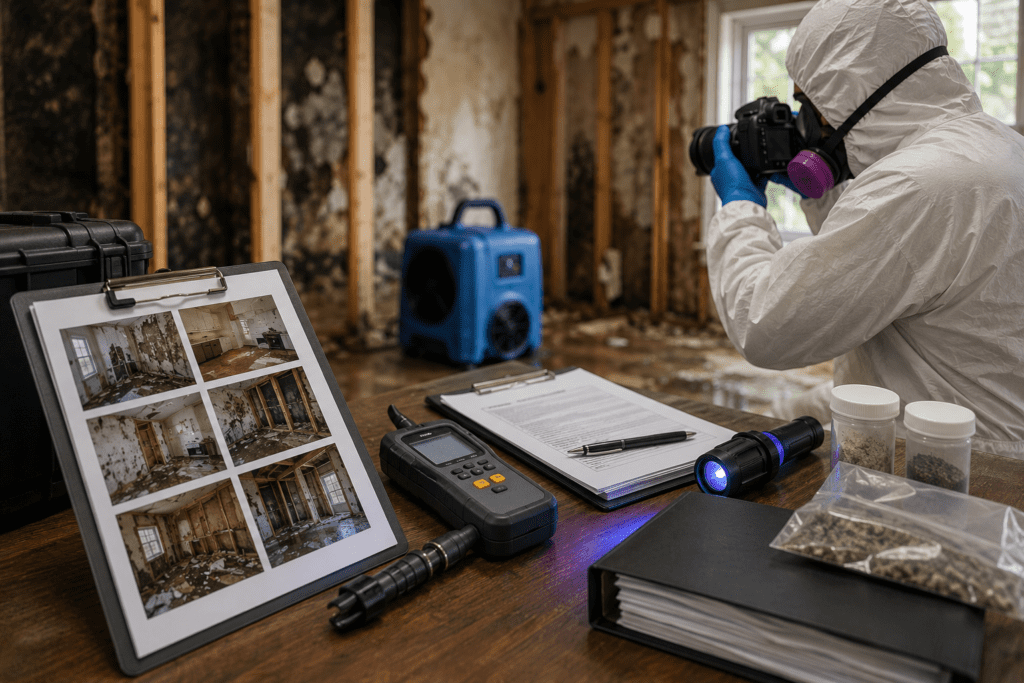
One of the most valuable aspects of professional remediation is documentation.
Proper Documentation May Include:
- before-and-after photographs,
- contamination assessments,
- moisture readings,
- ATP testing,
- disposal records,
- odor remediation reports,
- structural findings,
- and remediation timelines.
Why Documentation Protects Property Owners
Professional records help demonstrate:
- responsible remediation efforts,
- contamination mitigation,
- safety compliance,
- and recovery actions.
This documentation may become extremely valuable during:
- insurance discussions,
- code enforcement reviews,
- tenant disputes,
- legal investigations,
- property sales,
- and estate administration.
For landlords and property managers, this supports:
- inspection readiness,
- occupancy restoration,
- and liability reduction.
The Hidden Cost of “Cheap Cleanup”
One of the biggest mistakes property owners make is treating hoarding remediation as standard junk removal.
Removing visible clutter without proper remediation may leave behind:
- bacterial contamination,
- mold spores,
- urine saturation,
- pest residue,
- airborne contaminants,
- and hidden odor sources.
What Happens When Cleanup Is Incomplete
Properties may continue experiencing:
- recurring odors,
- tenant complaints,
- failed inspections,
- pest recurrence,
- mold growth,
- and occupancy delays.
A property that “looks clean” may still contain dangerous contamination beneath:
- flooring,
- drywall,
- insulation,
- cabinetry,
- and HVAC systems
Also Read ☣️Why DIY Odor Removal Fails After Trauma or Death
Why Professional Remediation Helps Restore Occupancy Faster
Professional remediation is designed to restore:
- safer conditions,
- inspection readiness,
- and operational usability.
Proper Remediation Helps Protect:
- occupancy timelines,
- tenant confidence,
- property reputation,
- insurability,
- and long-term marketability.
This is especially important for:
- apartment complexes,
- senior housing,
- inherited rental properties,
- mixed-use buildings,
- student housing,
- and commercial facilities.
The faster contamination is professionally addressed, the lower the likelihood of:
- extended vacancy periods,
- large-scale reconstruction,
- or escalating liability exposure.
Also Read ☣️Why Hoarding Cleanup Requires Biohazard Certification and Compliance
Real-World Scenario
A property manager in Westchester County begins receiving complaints from neighboring tenants about strong odors and rodent activity coming from one apartment.
After inspection access is obtained, remediation teams discover:
- floor-to-ceiling clutter,
- rodent infestation,
- blocked exits,
- severe odor penetration,
- mold growth behind furniture,
- and contamination spreading into adjacent units through shared ventilation pathways.
Professional remediation includes:
- containment systems,
- HEPA filtration,
- regulated waste disposal,
- odor remediation,
- pest treatment,
- and structural assessment.
Because remediation begins quickly, the property manager is able to:
- reduce vacancy time,
- avoid larger code enforcement actions,
- restore neighboring tenant confidence,
- and return affected units to occupancy significantly faster.

Conclusion
For property managers, hoarding situations are rarely just tenant problems.
They are operational problems. Liability problems. Environmental problems. Sometimes even public health emergencies hiding behind a closed apartment door.
What makes these situations especially dangerous is how quietly they escalate. A persistent odor complaint becomes mold growth behind walls. A cluttered unit becomes a fire hazard. A maintenance issue becomes contamination spreading into neighboring apartments. By the time the full extent of damage is visible, the property may already be facing:
- structural deterioration,
- pest migration,
- code enforcement pressure,
- insurance complications,
- and significant occupancy disruption.
That is why professional remediation matters.
Proper biohazard remediation helps property owners regain control of the situation through:
- contamination mitigation,
- documentation,
- structural assessment,
- odor remediation,
- safer occupancy restoration,
- and long-term property recovery.
It also helps protect something many landlords underestimate until it is threatened:
trust.
Trust from tenants. Trust from inspectors. Trust from buyers, insurers, housing authorities, and future occupants.
In today’s environment — where indoor air quality, habitability standards, and property transparency face increasing scrutiny — simply making a unit “look clean” is no longer enough.
Properties must be restored responsibly, documented properly, and remediated safely.
For landlords and property managers throughout New York, early professional intervention can mean the difference between:
- manageable remediation,
and - a prolonged, expensive property crisis.
The sooner contamination is identified and professionally addressed, the greater the opportunity to reduce liability, restore occupancy faster, protect long-term property value, and preserve the future usability of the building itself.
FAQs
1. Why is hoarding dangerous in apartment buildings?
Hoarding conditions may create fire hazards, pest infestations, mold growth, blocked exits, and contamination that can spread between units.
2. Can landlords face liability for hoarding situations?
Yes. Property owners may face liability related to unsafe living conditions, tenant complaints, code violations, and contamination spread.
3. How does hoarding affect neighboring tenants?
Odors, pests, airborne contaminants, and mold spores may spread through shared HVAC systems, walls, ceilings, and plumbing penetrations.
4. Why should property managers use professional remediation teams?
Professional remediation helps reduce liability, restore safer conditions, support inspections, and shorten vacancy timelines.
5. Does standard junk removal solve hoarding contamination?
No. Junk removal alone may leave behind hidden contamination, mold, bacteria, pest residue, and odor sources.
6. What documentation should remediation companies provide?
Professional remediation documentation may include contamination assessments, photographs, moisture readings, disposal records, ATP testing, and remediation reports.
7. Can hoarding damage building structures?
Yes. Long-term clutter may conceal water damage, mold, rotting framing, plumbing leaks, and weakened flooring systems.
8. Why do delayed cleanup efforts increase costs?
Contamination spreads over time, increasing remediation complexity, reconstruction needs, liability exposure, and occupancy disruption.
9. Can hoarding conditions affect occupancy inspections?
Yes. Severe contamination, blocked exits, fire hazards, and unsanitary conditions may create inspection failures or code violations.
10. Why is fast remediation important for property managers?
Early remediation helps reduce contamination spread, restore occupancy faster, protect neighboring units, and minimize operational losses.